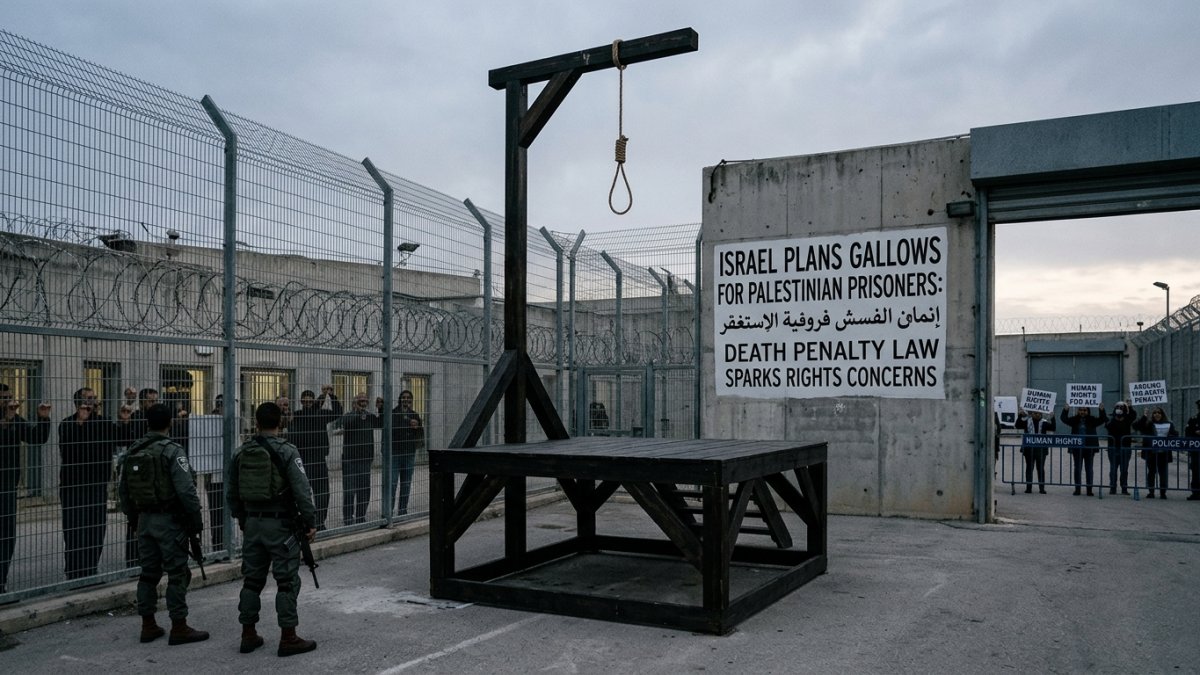
Israel’s Planned Gallows for Palestinian Prisoners Spark International Law Concerns
A new Israeli plan to build a facility for executing Palestinian prisoners has intensified criticism over Israel’s treatment of Palestinian detainees and raised serious questions about discrimination and international law.
Israeli National Security Minister Itamar Ben Gvir recently showed a construction site for the planned execution facility and highlighted that it would include a viewing area. The proposal has drawn condemnation because of the nature of the facility and concerns over the treatment of Palestinian prisoners.
The Knesset passed a law making the death penalty applicable to Palestinians convicted of certain attacks against Israelis. Critics argue that the measure creates a discriminatory system because Palestinians in the occupied territories are subject to different legal arrangements from Israeli settlers.
Human rights groups and UN experts have also raised concerns about Israel’s detention system. Thousands of Palestinians are held in Israeli custody, including administrative detainees who can be imprisoned without formal charges or trial. Rights organisations have documented allegations of torture and deaths in custody.
The proposed execution facility comes amid wider accusations of unequal treatment in the occupied West Bank, where Palestinians are generally subjected to military law while Israeli settlers are dealt with through Israel’s civilian legal system.
UN experts have warned that Israel’s death-penalty legislation violates its international legal obligations and has a discriminatory character. Critics say the combination of mass detention, allegations of abuse, unequal legal systems and the proposed executions represents a serious human-rights concern.
The debate is therefore not only about the death penalty. It is also about whether a legal system can apply fundamentally different standards to Palestinians and Israelis living in the same occupied territory.