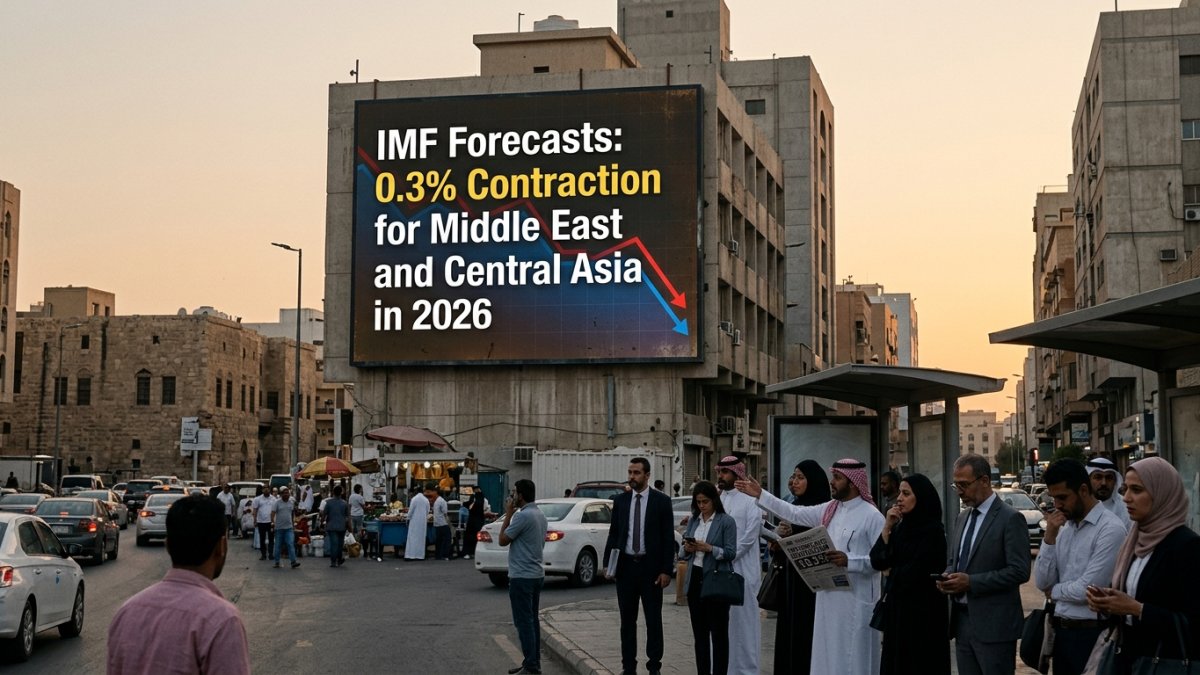
The International Monetary Fund has sharply lowered its 2026 outlook for the Middle East and Central Asia, projecting the region’s economy will contract by 0.3 percent. Its previous forecast had called for 1.9 percent growth, a sharp reversal as war-related disruption and shipping risks weigh on economic activity.
Hormuz disruption drives the downgrade
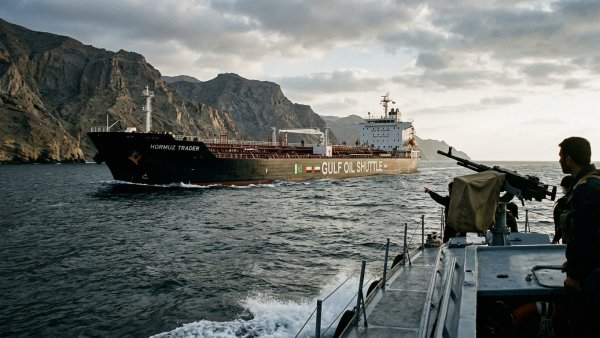
The revised outlook links weaker performance to prolonged disruption around the Strait of Hormuz and the wider conflict involving Iran. The waterway is a major route for energy shipments. Interrupted exports, damaged infrastructure, higher transport costs and weaker business confidence can affect producers as well as economies connected to regional trade.
The forecast covers a broad group of economies, so the regional average conceals sharply different national outcomes. Oil exporters facing lost production or export capacity are expected to experience the steepest contractions, while some Central Asian economies are still projected to expand.
Country projections vary widely
The IMF projects output to fall 16.7 percent in Kuwait, 16 percent in Iraq and 15.6 percent in Qatar during 2026. Bahrain is forecast to contract 11.3 percent, Iran 7.6 percent and Saudi Arabia 3.3 percent. Kyrgyzstan, by contrast, is projected to grow by 9 percent.
These are forecasts, not final measurements. They depend on assumptions about the duration of the conflict, the resumption of trade and energy flows, and countries’ ability to maintain production and transport links. A longer interruption or further damage could deepen the downturn; faster normalisation could improve the outlook.
Global growth still expected
The regional warning comes alongside a global growth projection of 3.1 percent, compared with an earlier 3 percent estimate. The Middle East and Central Asia was the only world region expected to post negative growth in the updated forecast.
The revised outlook shows how conflict around a strategic shipping chokepoint can transmit through oil revenues, freight costs, investment and confidence. The eventual impact will depend heavily on how quickly shipping and energy operations return to more predictable conditions.