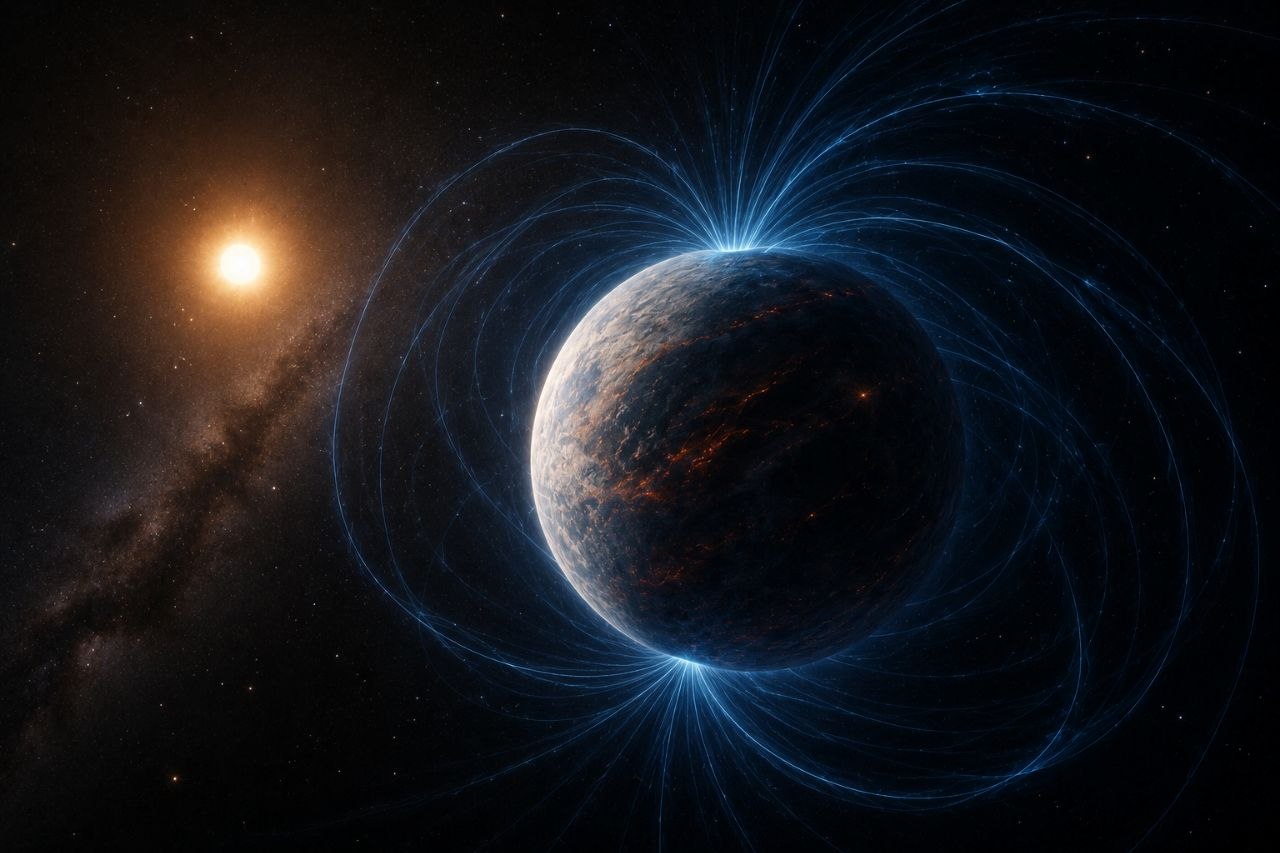
Astronomers have discovered exoplanets with detectable magnetic fields, a breakthrough that could improve understanding of how distant worlds develop and whether they may be capable of supporting life.
The findings provide scientists with valuable insight into planetary environments beyond the solar system. Magnetic fields play a crucial role in shielding planets from harmful radiation and charged particles emitted by nearby stars. On Earth, this protective barrier helps preserve the atmosphere and creates conditions favorable for life.
Researchers used advanced observational techniques to identify evidence of magnetic activity surrounding several exoplanets orbiting distant stars. The discovery marks an important step in studying the internal structure and evolution of these worlds, which are located far beyond direct exploration.
Scientists say the presence of magnetic fields may become an important factor when assessing the habitability of exoplanets in future research. While the newly studied planets are not necessarily suitable for life, the ability to detect magnetic protection on distant worlds opens new possibilities for understanding planetary systems across the galaxy. The findings are expected to contribute to ongoing efforts to identify environments that could potentially support life beyond Earth.