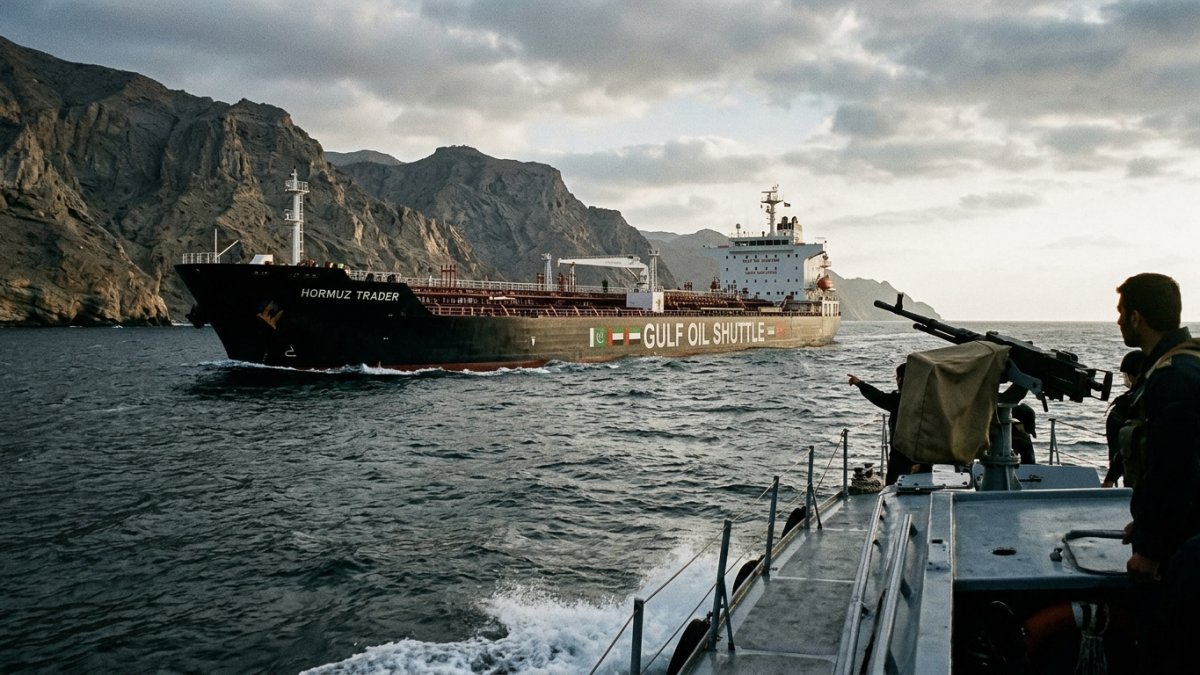
Iranian officials have warned that ships using a Gulf oil-transfer route through the Strait of Hormuz could face further attacks. The shuttle operation has helped regional producers move crude while conflict and restrictions on Iranian ports have disrupted normal shipping.
How the oil shuttle operates
The route uses smaller vessels to carry oil from regional ports through a southern corridor near Oman, where cargo can be transferred to larger tankers in the Gulf of Oman. Ships may travel at night and turn off tracking transponders to reduce the risk of being targeted.
Iranian security official Mohsen Rezaei said the United States Central Command, with help from the United Arab Emirates military, was assisting the transfers. He claimed Iranian forces had been striking five or six participating vessels nightly for weeks. Those numbers and details are Rezaei’s claims and have not been independently verified.
Vessels targeted as tensions rise
Several ships were reported targeted overnight from Sunday into Monday, including two outbound tankers and another vessel near Sohar, Oman. The incidents followed other reported projectile attacks on ships using the route. Iran’s Revolutionary Guard has also warned about mines in the strait and said three tankers suffered major damage over the weekend; the available account did not independently establish the cause of every incident.
Tehran has tied its threats to the US naval blockade of Iranian ports. Rezaei also warned that US-linked cables, data centres and artificial-intelligence facilities in the UAE and around the strait could be targeted. He accused Saudi Arabia of helping Washington move oil, but did not threaten a direct attack on Riyadh.
Shipping and energy costs climb
The Strait of Hormuz carried roughly one-fifth of global oil and gas flows before the war. Maritime data showed an average of 31 ships transiting each day in the final week of September, down from 138 before the conflict. At least 15 vessels were believed to have been targeted in October up to the time of the report.
Greater danger has increased freight charges for Gulf crude. Shipping costs rose from about 1 to 3 percent of crude’s cost before the war to 25 to 30 percent, and some national oil companies offered discounts of up to $35 per barrel. Limited tanker availability and repeated transfers have added further strain to the logistics chain.
Continued attacks could deepen disruption to regional exports and raise costs across maritime trade. The outlook depends on whether the conflict eases, whether the shuttle route remains operational and how governments respond to threats against commercial shipping.