A new infrastructure threat
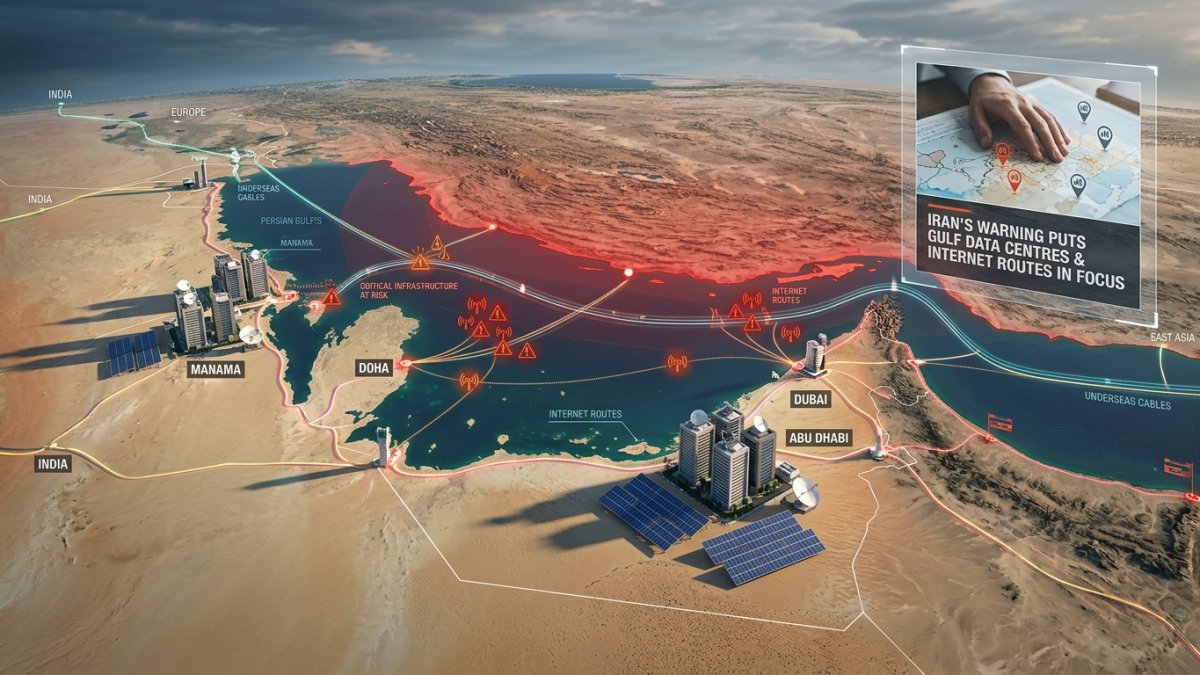
Iranian security official Mohsen Rezaei has warned that regional cables, data centres and artificial-intelligence facilities could be targeted if war with the United States resumes. The statement has drawn attention to the Gulf’s dependence on a small number of digital routes and fixed facilities.
Nearly one-fifth of global internet traffic passes through the Bab al-Mandeb area. More than 90 percent of data capacity between Europe and Asia travels through cables under the Red Sea, according to estimates from the research firm TeleGeography. Damage to a cable can affect several countries, while conflict can delay repairs by making access and safety difficult to guarantee.
How disruption can spread
Data centres support services including cloud computing and banking. A strike need not destroy servers to interrupt a facility: power, cooling and telecommunications can also be disabled. Earlier this year, Amazon Web Services said sites in the United Arab Emirates had been directly hit and a Bahrain facility physically affected during the US-Israel war on Iran. Tehran said attacks on US-linked commercial sites were retaliation for strikes on Iranian civilian installations.
The warnings do not show that Iran could systematically disable the Gulf’s digital network. Security analysts distinguish between causing serious disruption and destroying the region’s infrastructure as a whole. A small number of successful attacks could nevertheless have wider economic effects because so much data and computing capacity is concentrated in the region.
Building alternative routes
Governments and companies are exploring alternatives to the Red Sea corridor. Iraq has signed an agreement with Qatar’s Ooredoo for a land-based data route from al-Faw to Rabia near the Turkish border. Microsoft has also announced more than $400 million in planned investment in subsea and land connectivity across the Middle East by 2030.
These projects could add resilience, but they will take time to complete. Gulf states continue to invest heavily in cloud computing and artificial intelligence. Their challenge is to protect electricity, cooling and communications infrastructure while reducing reliance on a limited number of vulnerable routes.