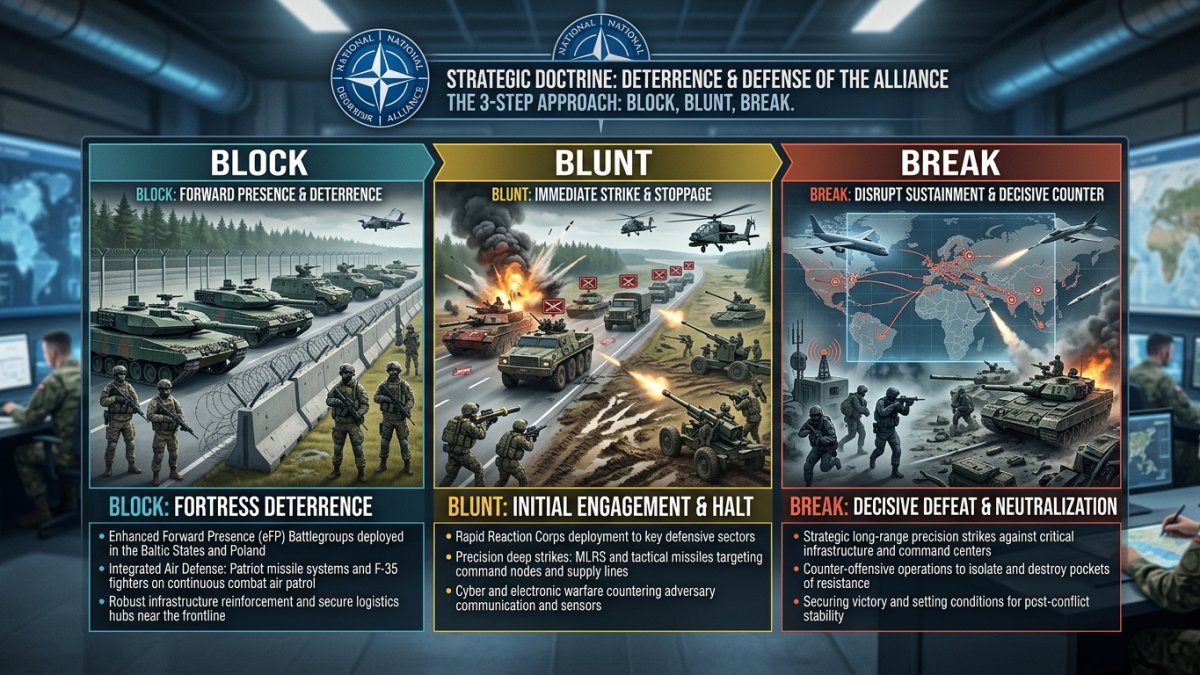
Three stages of defence
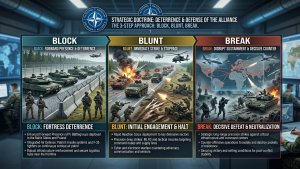
NATO’s top military commander, General Alexus Grynkewich, has outlined a three-part approach to responding to a possible Russian attack: “block, blunt and break”. He presented the strategy at the Warsaw Security Forum on October 12, describing a plan to prevent an invasion from advancing rather than to seize enemy territory.
The first stage, “block”, would seek to halt an attack at the border. “Blunt” would involve striking advancing forces across land, air and sea. If aggression continued, the final stage, “break”, would target supply chains and command networks to limit the forces’ ability to operate.
Grynkewich said NATO does not consider a confrontation with Russia imminent or inevitable, but argued that the alliance must be prepared. He said the strategy draws on lessons from Ukraine and conflicts in the Middle East, including the use of drones, autonomous systems and precision weapons that can be deployed at scale.
Concerns beyond conventional war
European officials have also warned about threats below the threshold of open conflict, including cyberattacks, sabotage and interference with undersea cables. Germany’s foreign intelligence chief, Martin Jaeger, recently warned that the country risked being drawn into a violent conflict with Russia. German officials have pointed to suspected sabotage and covert operations as part of a broader “shadow war”.
The plan is being discussed as political strains persist within NATO. Trump’s proposed diesel arrangement with Russia has unsettled European governments, many of which continue to support Ukraine. The alliance will need to coordinate its military planning and political response to keep its deterrence credible.