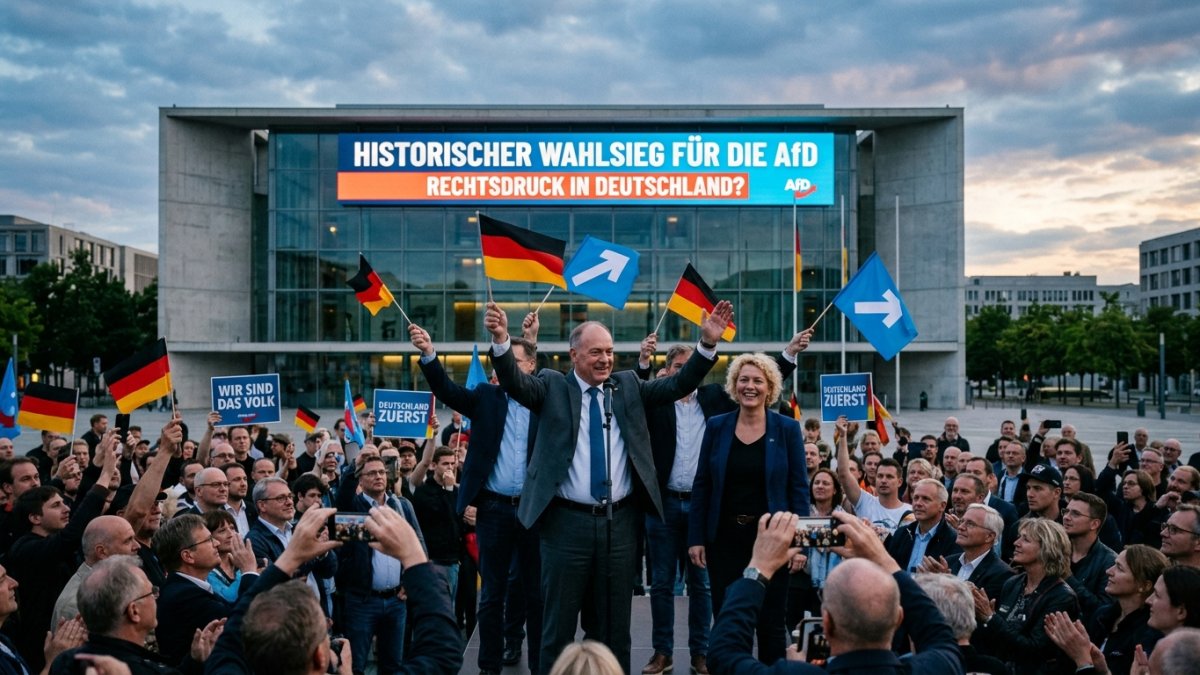
Germany’s AfD Wins Historic Victory: Is the Far Right Nearing Power?
Germany’s far-right Alternative for Germany (AfD) has scored a historic victory in the eastern state of Saxony-Anhalt, winning 43.8 percent of the vote in the state election.
The result gives AfD 39 of the 83 seats in the state parliament, leaving it just three seats short of an outright majority. The party’s performance is its strongest result in a German state election and could open a path toward its first state government since World War II.
A Major Blow to Germany’s Mainstream Parties
Chancellor Friedrich Merz’s CDU suffered a major setback, falling to about 17 percent. The result reflects growing frustration with established parties, particularly over immigration, economic pressures and the direction of German politics.
AfD leader Ulrich Siegmund is now seeking a way to form a government. The party may need support from other lawmakers because it does not have enough seats to govern alone. The left-wing populist BSW, which shares some of AfD’s positions on immigration and Russia, has indicated a willingness to cooperate on certain matters.
Pressure on Germany’s Political Firewall
The result is testing Germany’s long-standing refusal by mainstream parties to cooperate with AfD. Merz has rejected working with the party, despite the election result putting AfD in a powerful position.
The victory also highlights the party’s particular strength in eastern Germany, where economic insecurity, population decline and dissatisfaction with traditional political parties have helped fuel its support.
AfD’s breakthrough does not mean it is about to take national power. But the result is a significant warning for Germany’s mainstream parties and gives the far right fresh momentum ahead of the 2029 federal election.