As Gaza’s cities are flattened, its population displaced, and tens of thousands killed, the European Union is facing mounting accusations of hypocrisy — maintaining a massive trade relationship with Israel while offering what critics describe as minimal and symbolic consequences.
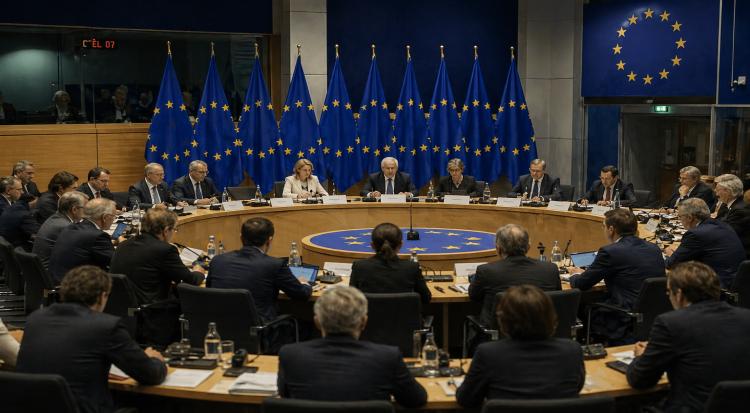
Spain, Ireland, and Slovenia have called for the suspension of the EU–Israel Association Agreement, a trade framework worth more than €60 billion annually when goods and services are combined. Their push comes amid widespread destruction in Gaza, where large portions of infrastructure — including homes, hospitals, and schools — have been decimated by Israeli bombardment, and humanitarian conditions continue to deteriorate.
Health authorities in Gaza report that more than 72,000 Palestinians have been killed, with the toll continuing to rise even after periods of ceasefire. However, some researchers and analysts argue the true figure could be significantly higher when accounting for missing persons, starvation, and indirect deaths with estimates of up to half a million people. Pointing to the scale of destruction and collapse of basic services.
At the same time, reconstruction estimates suggest that rebuilding Gaza could cost around $70 billion, underscoring the magnitude of the devastation.
Yet despite this, EU action remains limited. While trade flows in the tens of billions continue, the financial measures being discussed — often amounting to only a few hundred million at most — are widely criticised as negligible in comparison.
Critics argue the gap is so vast that it renders the response almost meaningless — a token gesture rather than real accountability.
The contrast is even sharper when compared to other global conflicts. The EU has imposed sweeping sanctions on Russia over Ukraine and continues to expand penalties against Iran—even though America and Israel bombed them first and initiated the war. In Israel’s case, despite allegations of genocide, violations of international law, war crimes, widespread destruction, attacks on civilian infrastructure, indiscriminate killing of women and children, starving Gaza's people, withholding humanitarian aid, rape and torture of detainees, and a long list of other terroristic behavior, no comparable economic pressure has been applied.
For Palestinians and their supporters, the conclusion is increasingly stark: international law is enforced selectively, with political considerations outweighing accountability even amid widespread destruction and human suffering.