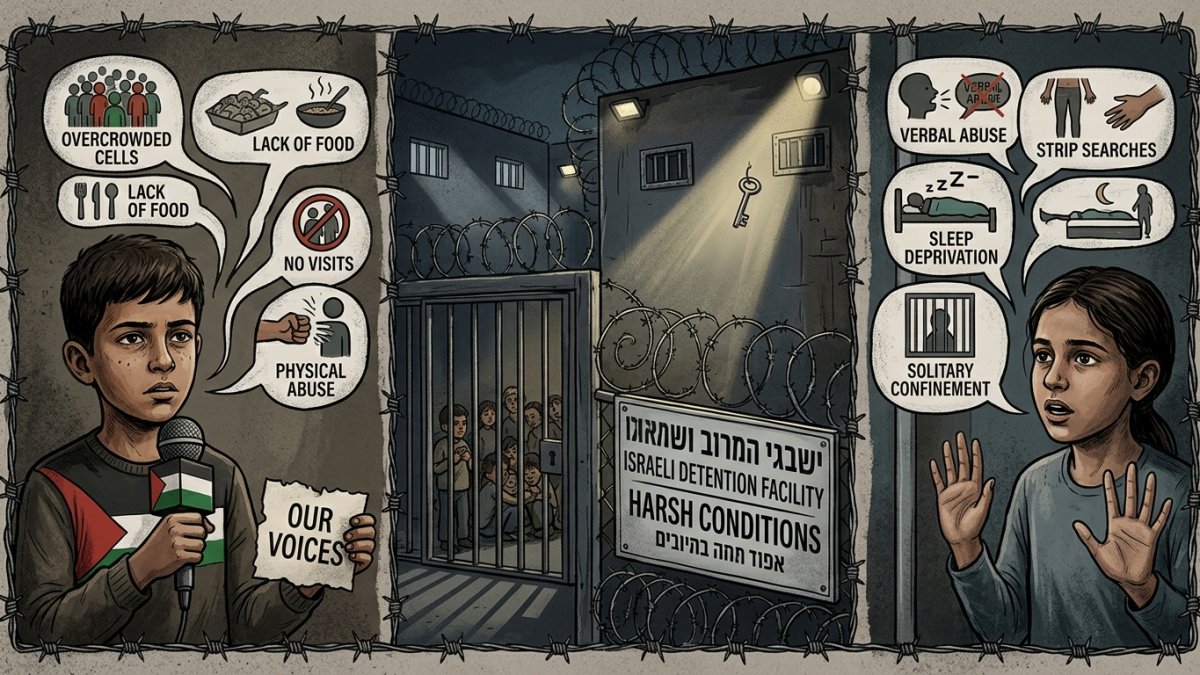
Accounts from families and rights advocates point to difficult conditions faced by Palestinian children held in Israeli prisons, including reported food shortages, inadequate hygiene, alleged physical mistreatment and lasting emotional distress.
A mother in occupied East Jerusalem told Al Jazeera that she has not been able to visit her 17-year-old son, Mohammed, at Megiddo Prison for about two years. He was arrested in February 2023, aged 13, after an incident at a checkpoint in Shu’fat refugee camp and was later sentenced to 18 years. His family says they remain worried about his health and the conditions in which he is held.
The mother said a lawyer had reported that children in the facility often went to bed hungry. She also described concerns about limited bathing, overcrowding and skin disease. In September 2025, Israel’s Supreme Court found that the Israel Prison Service had failed to provide Palestinian prisoners with adequate food. The service has rejected allegations of starvation.
Families separated from detained children
In the northern West Bank town of Tammun, 16-year-old Ola Qatish was arrested during a night-time raid on her family home in May, according to her sister. The family said the arrest was linked to an accusation of incitement against Israel, but they had not received further details about the charges. Ola had been taking part in a school mural competition and learned through her lawyer that she had won first place across the West Bank.
Her sister told Al Jazeera that a lawyer later reported Ola had developed scabies, which the family associated with limited hygiene and infrequent bathing at Damon Prison. Ola was awaiting a court hearing scheduled for October, the report said.
Adalah lawyer Lubna Tuma said detained Palestinian children face isolation and are sometimes brought to meet lawyers blindfolded. She argued that providing only basic necessities fails to account for children’s specific needs, health and dignity.
Detention’s effects after release
Muin Salahat, 16, from Beit Fajjar, was released in June after 16 months in administrative detention, his father told Al Jazeera. He had not been told the charges against him, according to the report. His family said he suffered from scabies in detention and continued to experience skin problems after release
His father also described changes in Muin’s behaviour and said memories of poor food and raids on crowded cells continued to trouble him. The experience has affected his education, as he considers leaving school after falling behind his classmates.
Palestinian prisoner advocacy organisations estimate that about 1,900 Palestinian children have been arrested in the occupied West Bank since October 2023. They say the number of children detained from Gaza is unknown because information about their whereabouts and status is difficult to obtain. The groups report that 360 Palestinian children remain in Israeli detention.
In a submission to the UN Committee Against Torture in October 2025, Defense for Children International-Palestine said 74 percent of 325 children whose testimonies it collected reported violence. The organisation also said 26 percent reported interrogation under duress and 21 percent reported at least two days in solitary confinement.
Child-rights expert Ayed Abu Qtaish told Al Jazeera that the psychological impact can continue after release. The figures and accounts in the report are attributed to families, lawyers, advocacy organisations and the cited submission. Israeli prison authorities have rejected starvation allegations.