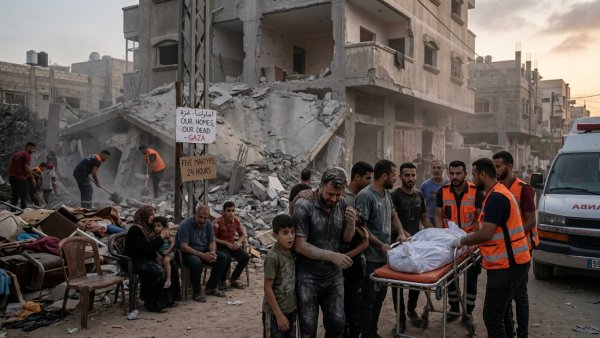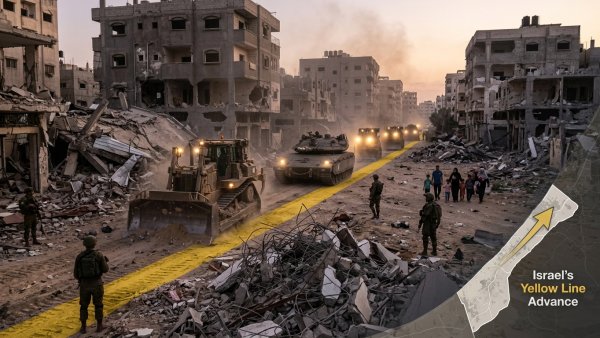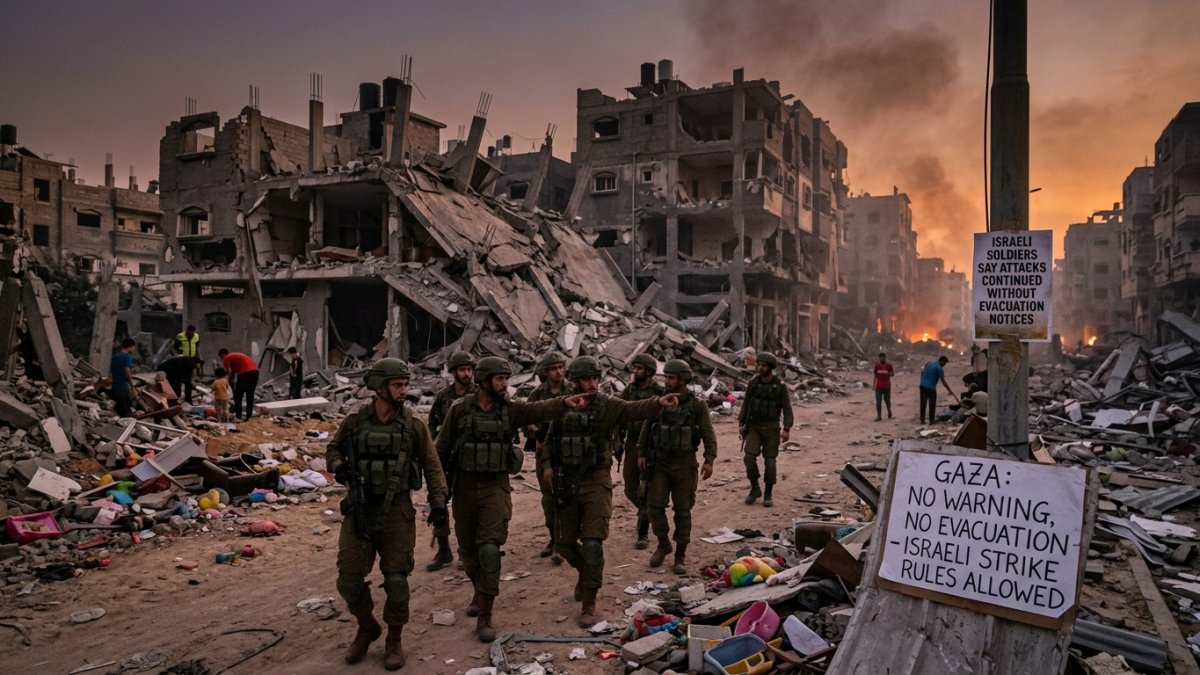
Four Israeli military intelligence soldiers said they were instructed to use heavy bombs against inhabited buildings in Gaza without first evacuating residents. Their accounts describe changes to targeting rules and the risks to civilians during the war.
Jabalia attack and civilian toll
The soldiers recounted a strike on a residential complex in Jabalia on October 31, 2023. The stated target was Ibrahim Biari, a Hamas battalion commander believed to be in a tunnel beneath the area. One soldier said the intelligence team did not know which building stood above the tunnel. He said the decision was to destroy the buildings above it while people remained inside, without an evacuation.
Another soldier said planners estimated that 250 to 300 civilians could be harmed and that the plan was sent to the chief of staff for approval. He later understood that about 250 people had died. These numbers reflect the soldiers’ accounts and are not presented as an independently verified casualty count.
The Israeli military disputed key parts of that account. It said the strike was redesigned several times to reduce civilian harm, that its expected death toll was not in the hundreds, and that the damage later proved greater than its initial assessment.
Wider targeting rules
A soldier from a drone unit said the division could conduct strikes expected to injure up to 20 non-combatants without approval from a senior official outside the targeting cell. Another intelligence soldier described planning an advance into Gaza City, where an assessment indicated that about one-quarter of residents might still be in their homes. He said attacks began without a full evacuation.
The four soldiers spoke anonymously. Their descriptions concern military orders and internal assessments; the Israeli military’s response contests the expected civilian toll and the precautions taken in the Jabalia strike.