What US Sanctions on Syria Remain as Shibani and Barrack Hold Talks?
Syria is seeking to remove the remaining US sanctions that continue to restrict its economic recovery, as Foreign Minister Asaad al-Shibani and US special envoy Tom Barrack discuss reconstruction, financial reintegration and regional security.
The talks in Istanbul come after Washington lifted most of its broad sanctions on Syria in 2025. Damascus now wants the remaining restrictions removed so it can attract investment and reconnect with the global financial system.
A long history of US sanctions
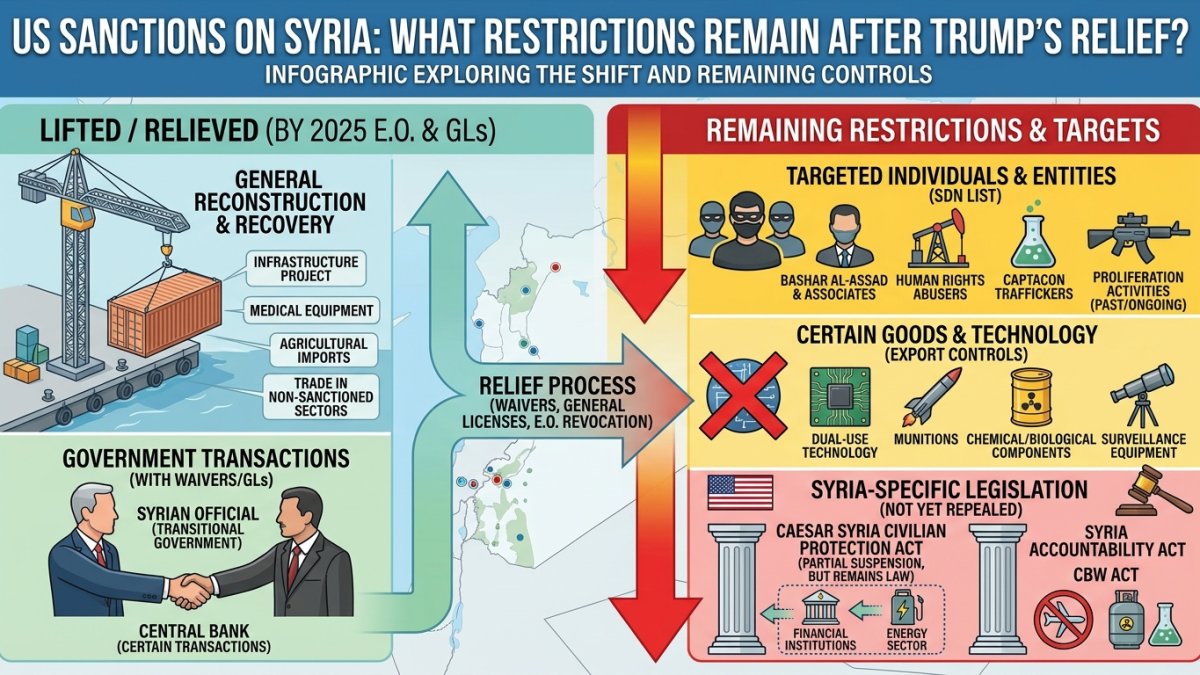
The United States first sanctioned Syria in 1979 by designating it a state sponsor of terrorism. Additional measures followed in 2004 under the Syria Accountability Act, targeting Damascus over accusations involving terrorism, weapons of mass destruction, its presence in Lebanon and support for fighters entering Iraq.
After the Syrian war began in 2011, Washington imposed further sanctions on government officials and others accused of human rights abuses, including former President Bashar al-Assad.
The Caesar Act, introduced in 2020, significantly expanded economic pressure by targeting the Syrian government and foreign companies dealing with it.
Most broad sanctions lifted, but restrictions remain
In June 2025, President Donald Trump ended the broad US sanctions program against Syria, dismantling much of the framework that had restricted the Syrian economy.
However, Syria remained on the US list of state sponsors of terrorism. Trump moved to remove Damascus from that list in July 2026, but the required congressional review process is still underway.
Even if the designation is removed, targeted sanctions against individuals and organizations are expected to remain. These include asset freezes and restrictions on transactions involving former Assad officials and people or entities accused of terrorism or human rights abuses.
Syria tries to win US support
President Ahmed al-Sharaa’s government has attempted to address Washington’s security concerns by cooperating against Islamic State and joining the Global Coalition to Defeat ISIS in 2025. Damascus has also targeted Hezbollah networks and reduced its ties with Iran.
These steps are intended to improve Syria’s relationship with the United States and accelerate the removal of remaining restrictions.
Syria is also benefiting from sanctions relief elsewhere. The European Union lifted most economic sanctions in 2025, although restrictions remain against certain individuals and entities and on areas including weapons and security technology. Britain has similarly removed many measures while maintaining targeted sanctions and restrictions on chemical weapons and repression-related goods.
For Damascus, the remaining US restrictions are more than a diplomatic issue. Their removal could determine how quickly Syria can restore banking links, attract foreign investment and rebuild an economy devastated by years of war.