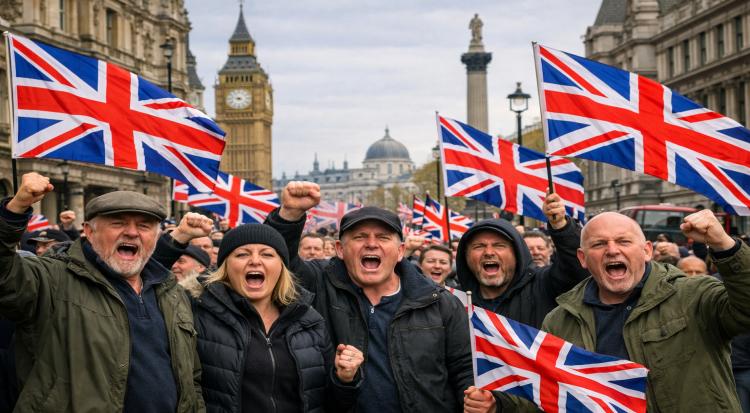
A far-right “Unite the Kingdom” rally in London sparked widespread backlash after inflammatory anti-Muslim speeches and provocative stunts targeting Islam circulated widely online. During the event, three women wearing niqabs briefly appeared on stage and removed the Islamic dress in what critics described as a deliberate attempt to mock Muslims and rile up the crowd.
The rally featured speeches from far-right anti-Islam activist Tommy Robinson and other nationalist figures, many of whom focused heavily on Islam, immigration and multiculturalism. Videos shared online showed speakers making openly hostile remarks about Muslims, with one speech declaring that “Islam has to be removed” from British society, triggering outrage across social media platforms.
Critics accused organisers of promoting Islamophobia under the guise of patriotism and free speech, warning that such rhetoric contributes to growing hostility toward Muslim communities in Britain. Activists and commentators said the language used at the rally went beyond political criticism and instead framed Muslims themselves as a threat to society.
Many online reactions also criticised what they described as Western double standards surrounding women and modesty. Commentators argued that Muslim women who wear Islamic clothing are often portrayed as oppressed, while removing clothing or rejecting religious dress is celebrated as empowerment and liberation.
Others warned that increasingly aggressive anti-Muslim rhetoric from far-right groups risks normalising hatred against visibly Muslim communities across Europe, especially as nationalist movements continue gaining attention online and at public demonstrations.
Some commentators also pointed to what they described as double standards in Britain’s political and legal climate. They argued that openly anti-Muslim rhetoric and demonstrations are often tolerated under free speech protections, while pro-Palestinian activists can face arrests, investigations or prison sentences for direct action protests. Critics further claimed that remarks viewed as offensive toward Jewish communities are quickly condemned as anti-Semitic, whereas hostile rhetoric directed at Islam and Muslims frequently receives far less political or media scrutiny.