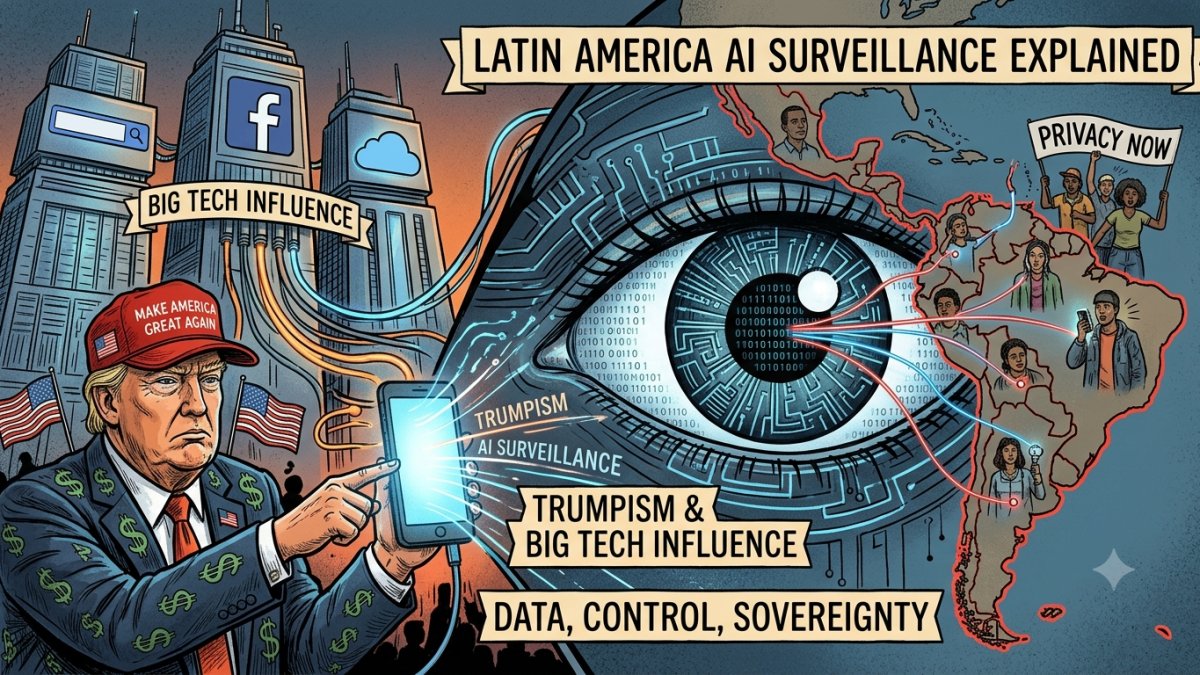
Latin America AI Surveillance, Trumpism and Big Tech Influence Explained
Latin America is increasingly being described as a testing ground for a new model of governance that combines artificial intelligence, biometric surveillance, corporate deregulation and close political alignment with the United States. Critics argue that this approach strengthens state monitoring while expanding the influence of major technology companies.
The debate has intensified following reports that billionaire Peter Thiel relocated to Argentina, while President Javier Milei's government introduced investment incentives aimed at attracting artificial intelligence companies. Supporters see the initiative as a way to boost innovation and economic growth, but critics warn that generous tax benefits, deregulation and access to natural resources could deepen foreign corporate influence over the country's digital infrastructure.
Concerns have also emerged over Argentina's expanding surveillance capabilities. Authorities have introduced new biometric and genetic data initiatives, including wider DNA registration and cooperation with the FBI on genetic profiling technology. Human rights advocates argue that such measures could disproportionately affect marginalized communities and increase the risk of racial profiling, especially if AI systems rely on historical policing data.
The article also links these developments to broader political trends across Latin America, where several conservative leaders have promoted tougher security policies, stronger relations with Washington and greater use of AI in policing and public administration. Although allegations of election interference in countries such as Colombia and Peru remain unproven, the author argues that the region is moving toward governance models centered on security, digital monitoring and expanded technological control.
According to the author, the growing partnership between governments and global technology firms could weaken national sovereignty by placing critical data infrastructure and public functions under private influence. The article concludes that without strong transparency, oversight and privacy protections, advanced technologies risk becoming tools of social control rather than instruments of public service.