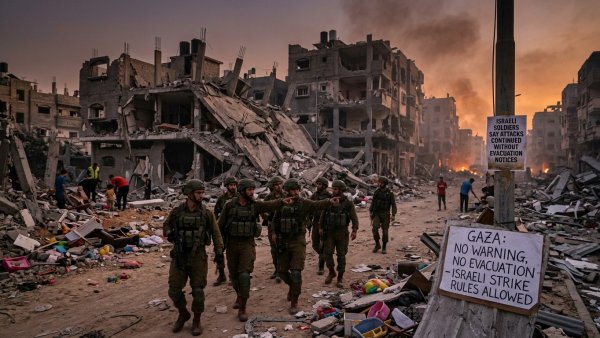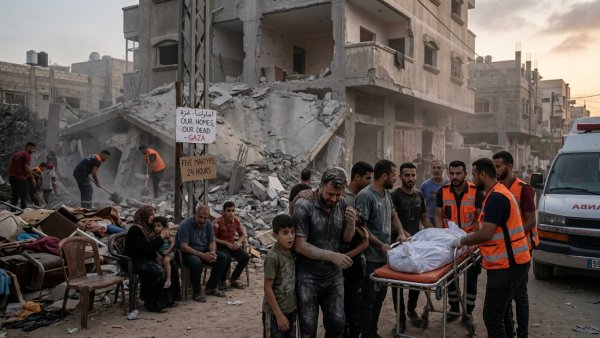
Families displaced by the war in Gaza are sheltering in buildings that could collapse, despite warnings to leave. With homes damaged, reconstruction limited and safe alternatives scarce, many say they have nowhere else to go as colder, wetter weather approaches.
Warnings without a safe place to move
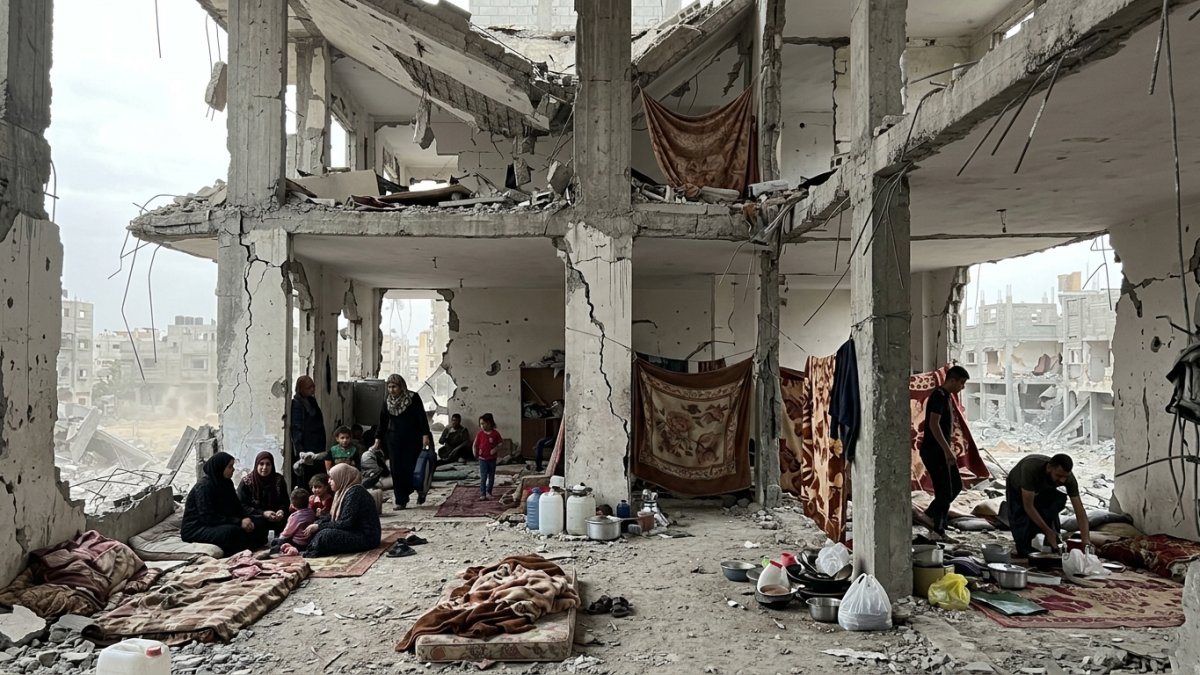
In Gaza City, 60-year-old Masada Abu Jarad lives with her family in an apartment beneath a partially collapsed roof. Concrete and exposed steel hang above part of the room, where the family has put up a tent. The Palestinian Red Crescent and Civil Defence warned them to leave, but the family says it cannot afford rent or find another place to stay.
The family is originally from Beit Lahiya but remains unable to return there after being displaced early in the war. After repeated displacement, another move without a safe destination or affordable rent feels out of reach.
Residents keep watch through the night
Abdullah Abu Hajar, 40, lives with his wife and five children in Gaza City’s al-Najma building. Around 17 families—about 50 to 60 people—are sheltering in the six-storey structure, which bears municipal warnings that it is unsafe. At night, he stays awake listening for shifting concrete, falling stones or other signs of movement.
Islam Hassanein, 36, and her five children occupy one room on the third floor of another damaged building. The structure is visibly leaning, its plumbing does not work, and the family must use a bathroom outside. She says she would leave if a safe place and a tent were available.
Rain could deepen the danger
Exposed roofs and walls leave families vulnerable to water, flooding and colder temperatures. Hassanein recalls spending much of the previous winter in a tent because rain entered the damaged building. She fears the weakened structure will face greater strain during the coming wet season.
The danger was underscored on September 16, when a damaged six-storey residential building in Gaza City collapsed, killing 21 people, including 12 children, according to the United Nations and Gaza Civil Defence.
A vast housing and shelter crisis
A joint assessment by the United Nations, World Bank and European Union found that 371,888 housing units—76.6 percent of Gaza’s housing stock—had been damaged or destroyed by October 2025. It estimated reconstruction would require more than $71 billion over the next decade.
The United Nations says thousands of people are sheltering in buildings considered unsafe because better options are unavailable. UNICEF estimates that nearly 84 percent of Gaza’s population—more than 1.76 million people—live in overcrowded displacement sites or damaged and inadequate shelters with little protection from cold, heavy rain and flooding. Restrictions on the entry of tents, tarpaulins and other shelter supplies add to the shortage.
For families in these buildings, the choice is stark: remain in a place they know may be dangerous, or try to move without a safe destination or the means to reach one.