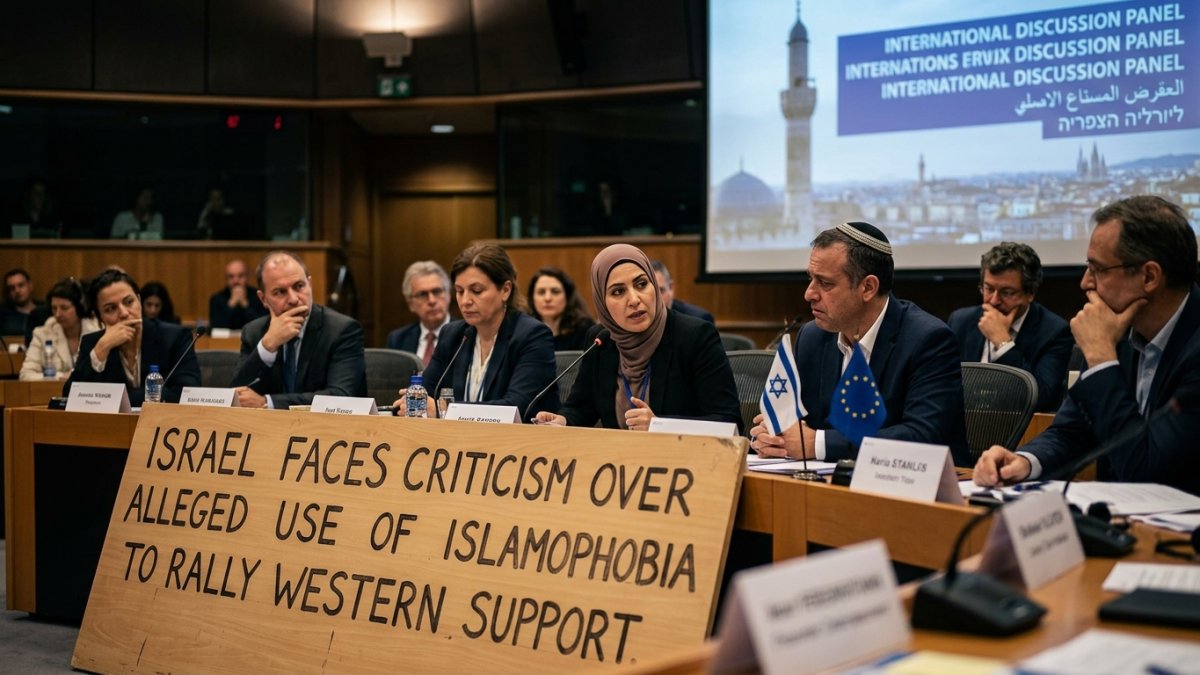
Israel Faces Criticism Over Alleged Use of Islamophobia to Rally Western Support
Israel is facing growing criticism over an alleged strategy of using Islamophobic rhetoric to preserve support among right-wing political movements in the West as its international reputation declines.
The argument centres on Prime Minister Benjamin Netanyahu’s increasingly frequent warnings about “radical Islam” and his efforts to portray Israel as a frontline defender of Western civilisation. The approach has coincided with stronger ties between Israel and far-right political groups in Europe and the United States.
The article points to a January conference in Jerusalem on antisemitism that brought together representatives from several European right-wing parties. Netanyahu reportedly framed these groups as partners in confronting what he described as an “invasion of radical Islam”.
In the United States, the growth of explicitly anti-Muslim political rhetoric has also become increasingly visible. The article cites the creation of a “Sharia-Free America Caucus”, alongside controversy over Muslim religious practices and a reported rise in attacks targeting Muslim communities.
The author argues that Israel's approach goes beyond Netanyahu's rhetoric and forms part of a broader public-relations and influence strategy. The article cites a leaked study commissioned by Israel's Foreign Ministry that reportedly identified fear of “Radical Islam” and “Jihadism” as an effective way to influence American public opinion.
It also refers to an Israeli-government-funded influence campaign in Canada that allegedly portrayed Muslim immigrants as a threat and suggested they sought to impose Islamic law.
Critics argue that these campaigns risk strengthening Islamophobia while diverting attention from Israel's conduct in Gaza. At the same time, the article notes that many Americans and Europeans have rejected anti-Muslim rhetoric, pointing to the electoral success of Muslim political candidates as evidence of resistance to such messaging.
The author concludes that using fear of Muslims to rebuild Western support could deepen social divisions without necessarily restoring support for Israel. Instead, it could further damage pluralism and intensify tensions between Muslim communities and the political establishment.