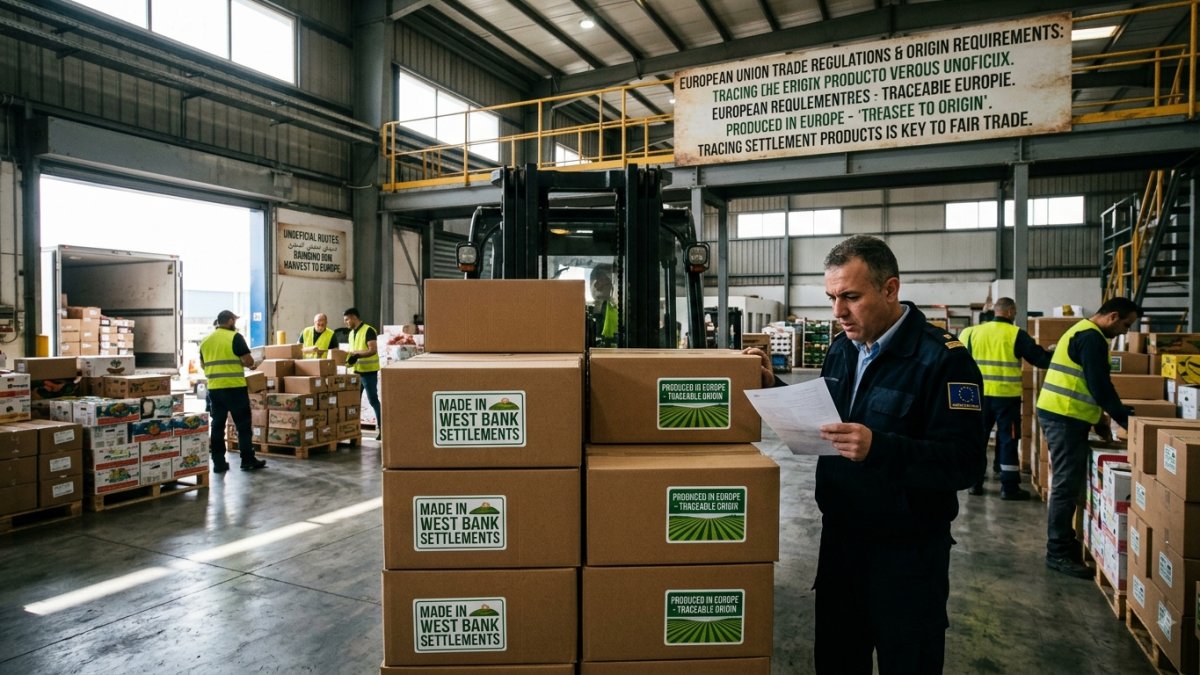
How Products From Israeli Settlements Reach European Markets
Products grown or manufactured in Israeli settlements in the occupied Palestinian territories continue to reach European markets, raising questions about their origin, labeling and the effectiveness of European trade controls.
A June 2026 report examined more than 30,000 export documents covering over 6,800 agricultural shipments between October 2017 and February 2026. It found that settlement products appeared in 17.2 percent of shipments destined for Europe and 19.2 percent of those sent specifically to the EU.
The report identified three main ways settlement goods can become difficult to trace. Exporters may list Israel as the country of origin despite providing a settlement location, use Israeli addresses that do not reflect where products were grown, or mix settlement produce with goods from inside Israel at shared packing and storage facilities.
Agricultural products including dates, citrus fruits, herbs, fruits and vegetables are among the goods highlighted in the report.
European countries have responded differently. The Netherlands is preparing a national ban, Ireland has advanced legislation to prohibit settlement imports, while Spain and Belgium have moved toward restrictions. France and Sweden have called for stronger EU-wide measures.
At the EU level, proposals including a full or partial import ban, higher tariffs and licensing requirements have been discussed, but no bloc-wide ban has yet been agreed.
The report argues that gaps in origin verification and divided responsibility between exporters and European authorities allow settlement-linked products to continue entering European markets.