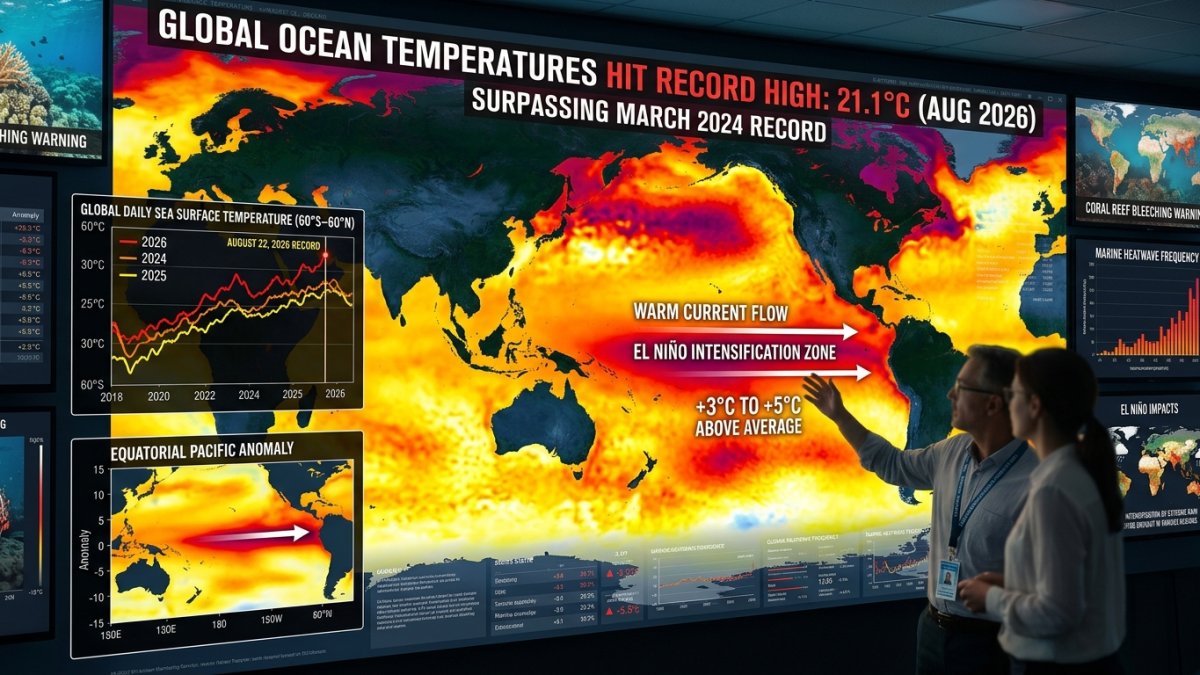
Global Ocean Temperatures Hit Record High as El Niño Intensifies
Global average sea surface temperatures have reached a record high, with the EU’s Copernicus Climate Change Service warning that a strengthening El Niño and human-driven climate change are putting unprecedented pressure on the world’s oceans.
Copernicus said sea surface temperatures reached 21.1°C on Friday and Saturday, slightly surpassing the previous record of 21.09°C set in March 2024. The timing is particularly unusual because global ocean temperatures typically peak around March and April, rather than August.
Scientists say El Niño is adding further heat to oceans already warmed by decades of fossil-fuel-driven climate change. The current El Niño is expected to strengthen through the coming months and could reach levels not seen for several decades.
Warmer oceans can raise sea levels through thermal expansion and increase the frequency and intensity of marine heatwaves, threatening coral reefs, seagrass ecosystems and marine food chains. The effects could also disrupt fishing and aquaculture.
Copernicus warned that warmer oceans absorb less carbon dioxide, weakening a major natural defence against climate change. Increased ocean heat and moisture can also contribute to more extreme weather events.
Oceanographer Jane Lubchenco described the record temperature as deeply concerning, warning that increasingly warm oceans could threaten weather patterns, food security, economies and marine life.