What Israel’s “Operational Control” Really Means for Hezbollah and Lebanon
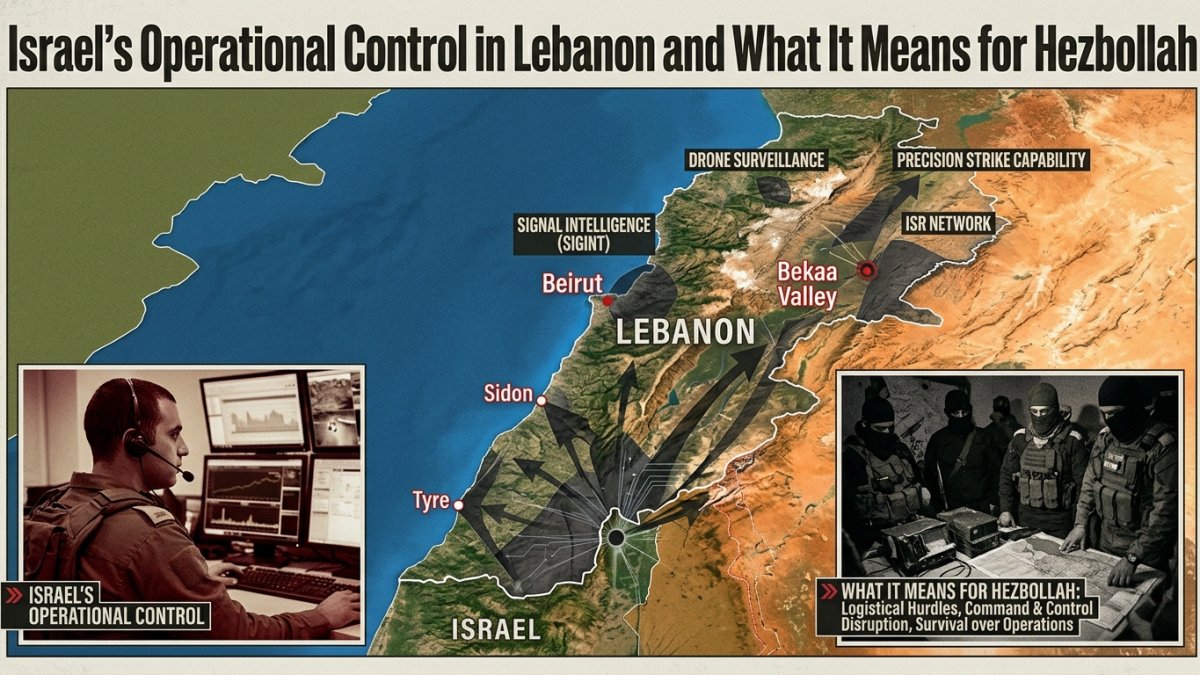
Israel’s announcement that it has established “operational control” over the Ali al-Taher ridge in southern Lebanon marks an important development in the military balance between Israel, Hezbollah and the Lebanese state. The strategic position overlooks parts of the Nabatieh area and has long been considered important because of its elevated terrain.
A Strategic Position
According to the analysis, Hezbollah’s withdrawal from the ridge may be less significant than what Israel does with the position afterward. Control of elevated ground can provide Israeli forces with improved observation and tactical advantages across surrounding areas.
The development also highlights the changing nature of Hezbollah’s military presence in southern Lebanon. Rather than maintaining permanent fixed positions in exposed areas, the group has increasingly relied on more flexible methods of operating following the 2024 conflict.
What It Means for Lebanon
Israel’s presence on Ali al-Taher could increase pressure on Hezbollah and complicate efforts to restore full Lebanese state control over the south. It also raises questions about whether the Israeli military intends to maintain the position temporarily or turn its presence into a longer-term arrangement.
For Lebanon, the issue adds to already serious tensions over Israeli military activity and the security situation along the southern border. The wider significance of the move will depend on whether it remains limited to a tactical position or becomes part of a broader Israeli strategy in southern Lebanon.