Gaza Seed Bank Rebuilds After War, Offering Hope for the Territory’s Agriculture
A small seed bank in central Gaza is rebuilding its collection of traditional crops after much of its stock was destroyed during the war between Israel and Hamas.
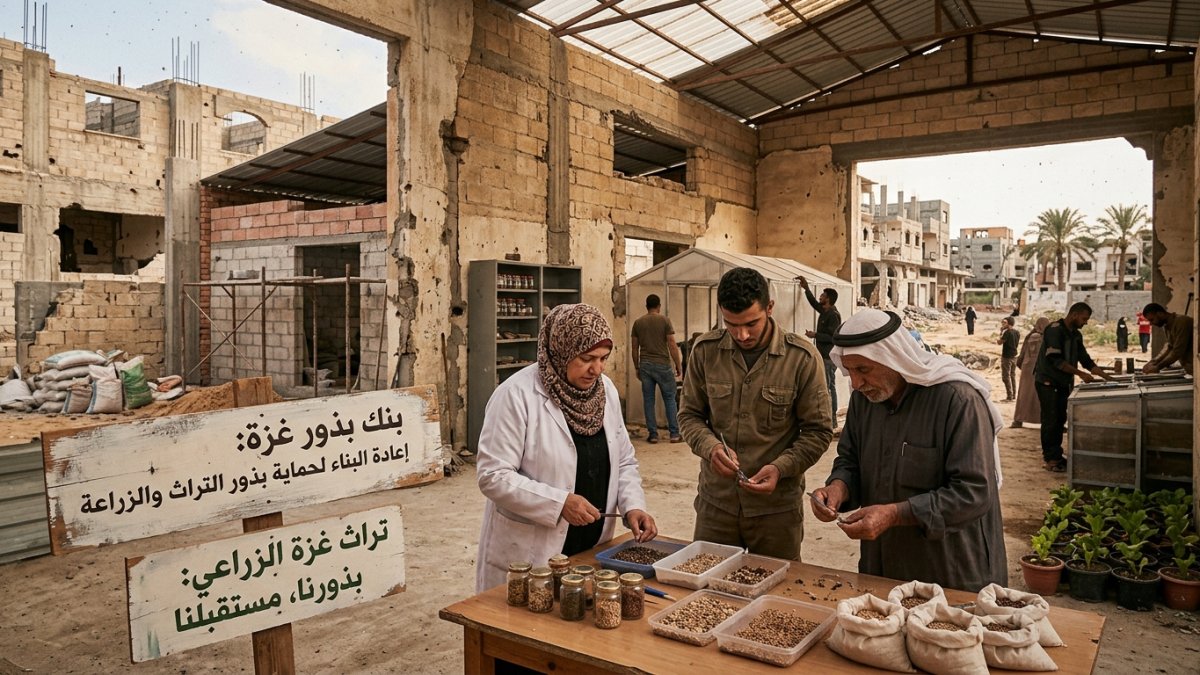
The Al Qarara Seed Bank, now operating from a makeshift tent in Deir el-Balah, preserves heirloom seeds that farmers can save and replant year after year. The project was established in 2017 with support from the International Committee of the Red Cross (ICRC).
The bank stores seeds for wheat, barley, spinach, parsley, Swiss chard, courgette, okra and other local crops. Manager Salem Muhanna says heirloom varieties helped farmers survive during the war because they can repeatedly produce reliable yields without depending on commercial seed supplies.
The conflict destroyed the original seed bank and wiped out many varieties. Repeated displacement also made rebuilding difficult, until the team eventually established a small facility using plastic containers, barrels and sacks to protect the remaining seeds.
Gaza’s agricultural sector devastated
The destruction of the seed bank reflects the wider collapse of Gaza’s agricultural sector.
According to the Food and Agriculture Organisation (FAO), only about 3 percent of Gaza’s cropland remains accessible and undamaged. Before the war, agriculture—including farming, herding and fishing—accounted for around 10 percent of Gaza’s economy.
Farmers are also facing severe shortages of water, fertiliser, agricultural chemicals and other supplies. Before the conflict, Gaza was largely self-sufficient in fresh vegetables and exported around one-third of its production. Current agricultural output is estimated to meet no more than 10 percent of local vegetable needs.
The seed bank therefore operates as a crucial backup system. Farmers receive seeds on loan and return part of their harvest as seeds at the end of the growing season, allowing the collection to be replenished and shared with others.
For farmers, the system provides a source of food production despite restrictions on agricultural supplies. For the ICRC and those managing the project, it also preserves Gaza’s agricultural heritage and local crop varieties for future generations.
The rebuilding effort remains modest, but its organisers describe the seed bank as a source of hope for Gaza’s devastated farming sector.