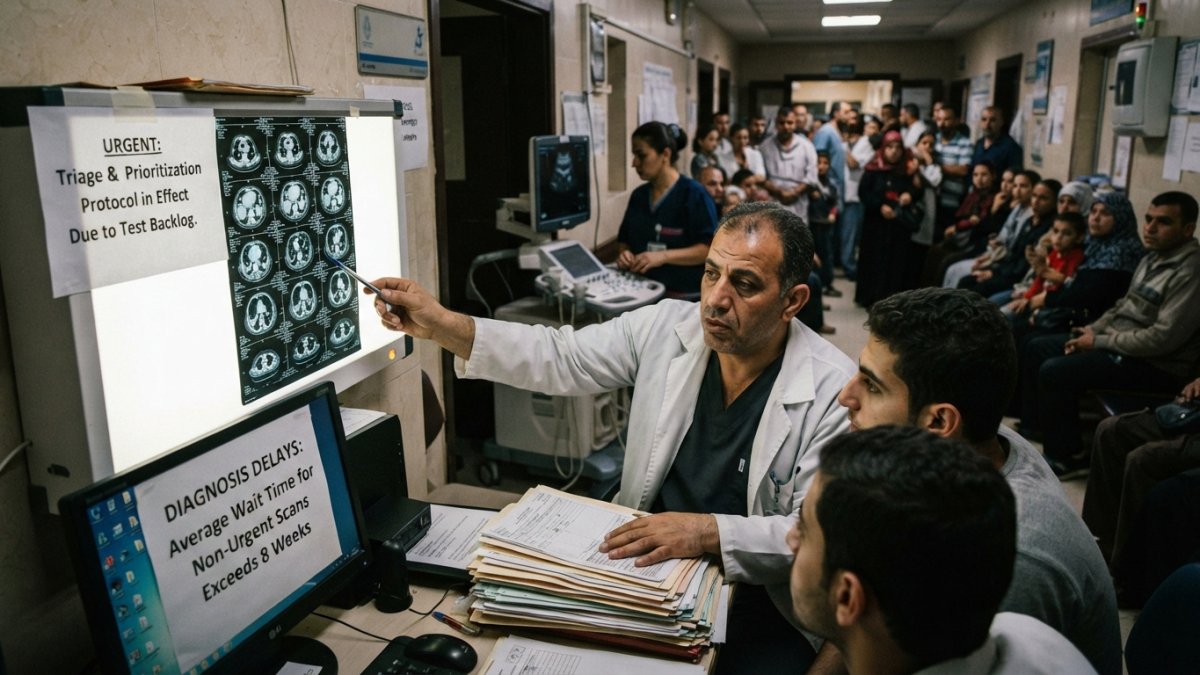
Doctors in Gaza are having to decide which patients receive scarce diagnostic tests as equipment shortages and damage to the health system lengthen waits for answers and treatment.
Only five of the territory’s 18 CT scanners remain operational, and those machines are working beyond capacity. MRI services are unavailable after nine machines were destroyed, leaving clinicians with fewer tools to identify injuries and serious illnesses.
Urgent cases come first
Medical teams have restricted laboratory tests, X-rays and CT scans to patients considered most urgent, according to hospital officials. That triage can help doctors direct limited resources to immediate emergencies, but it also leaves other patients waiting for examinations needed to confirm a diagnosis or monitor treatment.
The delays are particularly concerning for people with cancer and chronic conditions, including heart and kidney disease. These patients may require repeated tests to guide ongoing care, and postponements can complicate treatment decisions.
Doctors are working with shortages of medical supplies as well as equipment. When advanced imaging is unavailable, clinicians may have to rely on other methods that cannot always provide the same information.
A strained health system
The diagnostic bottleneck reflects a wider crisis in Gaza’s health services, where damaged facilities, limited supplies and heavy demand have reduced the system’s capacity. The few functioning scanners serve a population of more than two million people, placing further pressure on staff and equipment.
For patients, the result is prolonged uncertainty. For doctors, it is a daily effort to balance immediate emergencies against illnesses that may worsen while people remain on waiting lists.