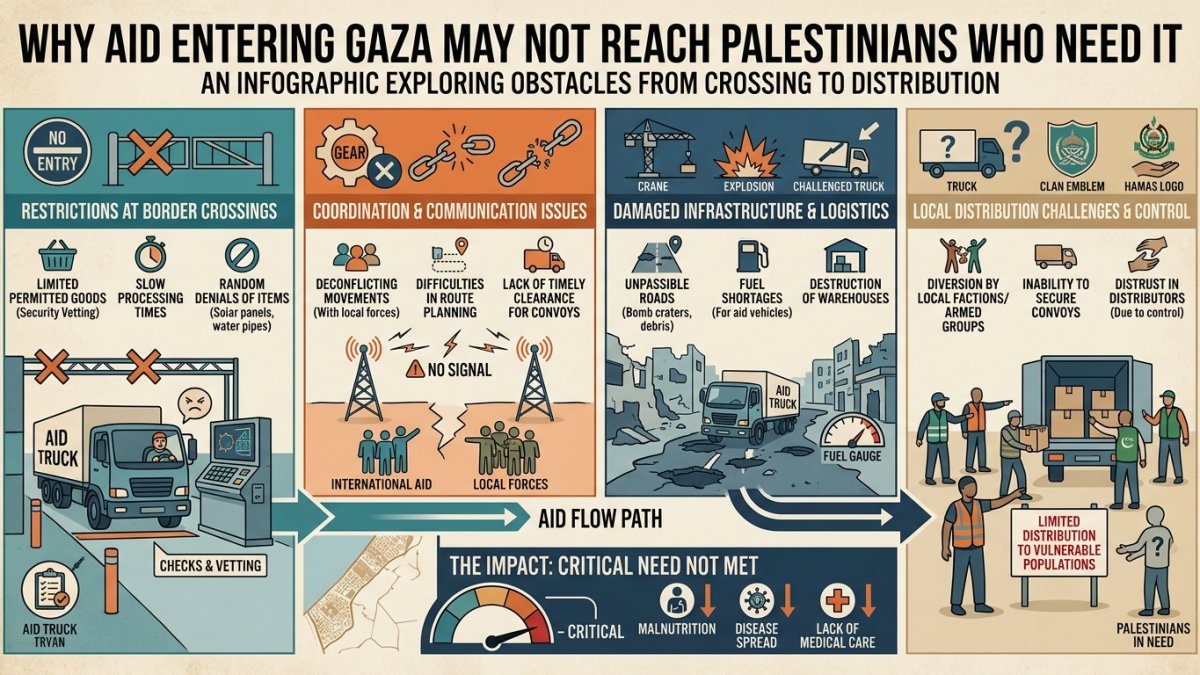
Why Aid Entering Gaza Still May Not Reach Those Who Need It
Aid entering Gaza does not automatically mean that food, medicine and fuel will reach civilians. The territory’s damaged transport system, fuel shortages, destroyed vehicles and dangerous roads have created another major barrier to humanitarian deliveries.
Before the war, around 1,200 vehicles supported Gaza’s transport and aid operations. Today, only a small number remain operational. At least 150 vehicles have reportedly been damaged or destroyed, while others are kept running by mechanics using salvaged parts.
A broken aid network
Trucks entering from Egypt must pass through inspections before travelling toward warehouses and distribution centres. Their routes can take them through heavily damaged roads, where broken vehicles, shortages of tyres and fuel and destroyed infrastructure can stop deliveries.
A truck that breaks down can leave its entire cargo stranded. With so few functioning vehicles available, every breakdown puts additional pressure on the remaining fleet.
The drivers themselves also face serious risks. Aid workers and transporters can encounter Israeli military operations and armed groups while attempting to move supplies through Gaza. Some drivers have been killed during aid deliveries.
The final journey is the biggest challenge
The number of trucks allowed through crossings is only part of the problem. The more difficult question is how many vehicles can actually reach warehouses and distribution points once inside Gaza.
Damaged roads, fuel shortages, traffic, vehicle breakdowns and security risks can prevent supplies from completing the final part of their journey.
This means that measuring aid only by the number of trucks entering Gaza can give an incomplete picture. The crucial measure is how much aid successfully reaches distribution centres and, ultimately, civilians.
Until Gaza’s transport infrastructure, fuel supplies and humanitarian access improve, supplies entering the territory may continue to face major obstacles before reaching the people who need them most.