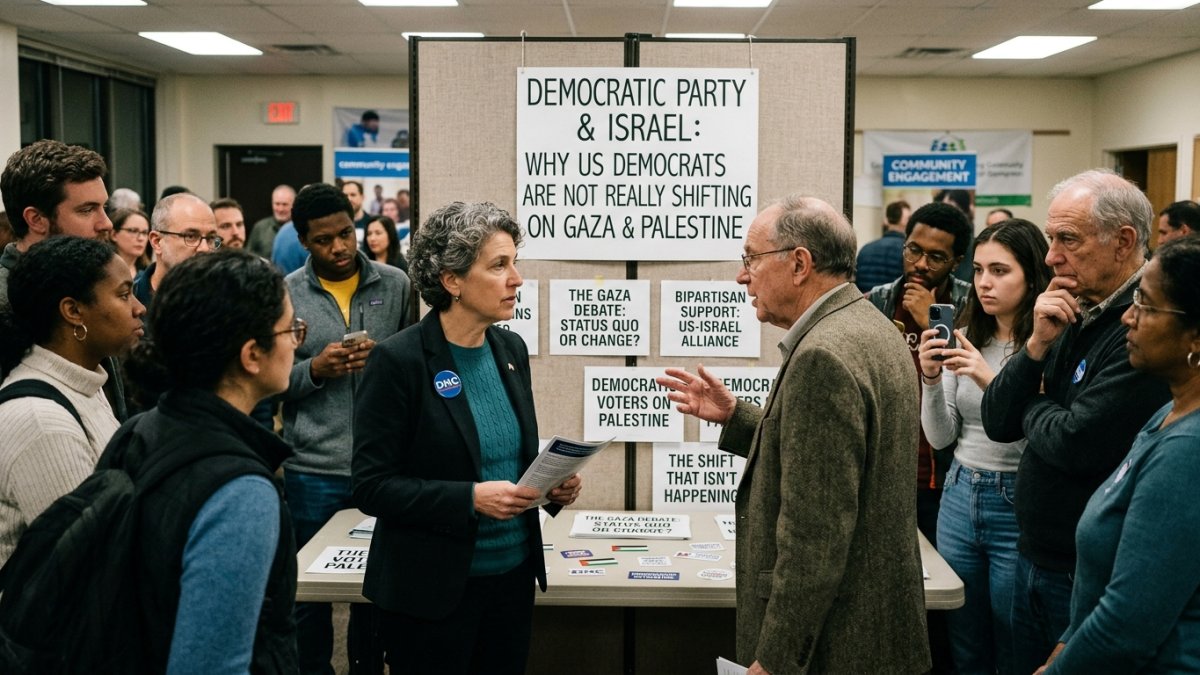
No, the Democratic Party Is Not Shifting on Israel
Recent Democratic primary victories by outspoken critics of Israel have raised hopes among pro-Palestinian voters, but claims that the Democratic Party has fundamentally changed its position on Israel may be premature.
Candidates such as Abdul El-Sayed in Michigan and Adam Hamawy in New Jersey have demonstrated growing support for politicians willing to challenge Israel and AIPAC. Public opinion among Democratic voters has also shifted sharply. Recent polls show large majorities of Democrats opposing or questioning US military support for Israel, while unfavourable views of Israel have risen significantly.
This growing public pressure has forced Democratic leaders to change their rhetoric. Some politicians who previously defended the Biden administration's approach to Gaza are now expressing regret or calling for greater pressure on Israel.
However, rhetoric has not necessarily translated into policy.
A July House vote on cutting billions of dollars in annual military assistance to Israel received support from many Democrats, but a larger group still opposed the measure. Critics argue that such votes allow Democratic politicians to appeal to increasingly critical voters without fundamentally changing US support for Israel.
The party also continues to face criticism over its relationship with AIPAC. The Democratic National Committee rejected a resolution condemning AIPAC's influence in Democratic primaries, while pro-Israel groups continue to spend heavily in congressional races.
Even progressive Democrats have limits. Some now describe Israel's actions in Gaza as genocide or call for ending military aid, yet many continue to qualify their positions by emphasising condemnation of Hamas or declining to fully recognise Palestinian rights, including the right to self-defence.
For Palestinians, these distinctions matter. After years of violence and displacement, symbolic statements are not enough. Real political change would require policies that recognise Palestinian rights and challenge the systems enabling occupation, displacement and military violence.
Still, every progressive candidate willing to confront AIPAC and challenge unconditional support for Israel represents a potential change in Congress. The argument is therefore not to reject these candidates, but to continue pressuring them after they are elected.
The Democratic Party may be responding to changing public opinion, but a genuine shift will be measured by actions—not campaign-season rhetoric.