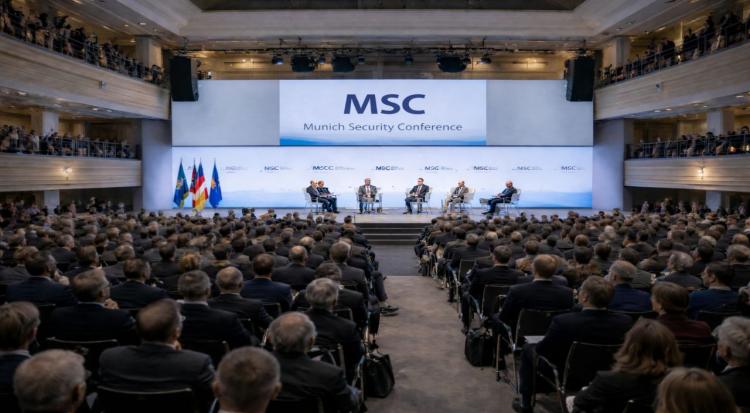
Global leaders gathered in Germany from February 13–15 for the annual Munich Security Conference, as major wars and rising geopolitical tensions dominated the agenda. The three-day summit brought together presidents, prime ministers, defense ministers and security officials to discuss conflicts in Ukraine, instability in the Middle East, and broader global security concerns.
The war between Russia and Ukraine remained a central focus, with Western officials reaffirming continued military and financial support for Kyiv. European leaders emphasized the need for long-term defense coordination and stronger NATO cooperation amid concerns about prolonged conflict and regional security risks.
Discussions also addressed the ongoing violence in Gaza, fears of escalation involving Iran, and the wider impact of global conflicts on energy markets, trade and economic stability. U.S. officials reiterated commitments to transatlantic alliances while encouraging European partners to increase defense spending.
Founded in 1963, the Munich Security Conference has become one of the world’s leading forums for strategic dialogue, often serving as a platform for major diplomatic announcements and policy proposals during periods of international uncertainty.