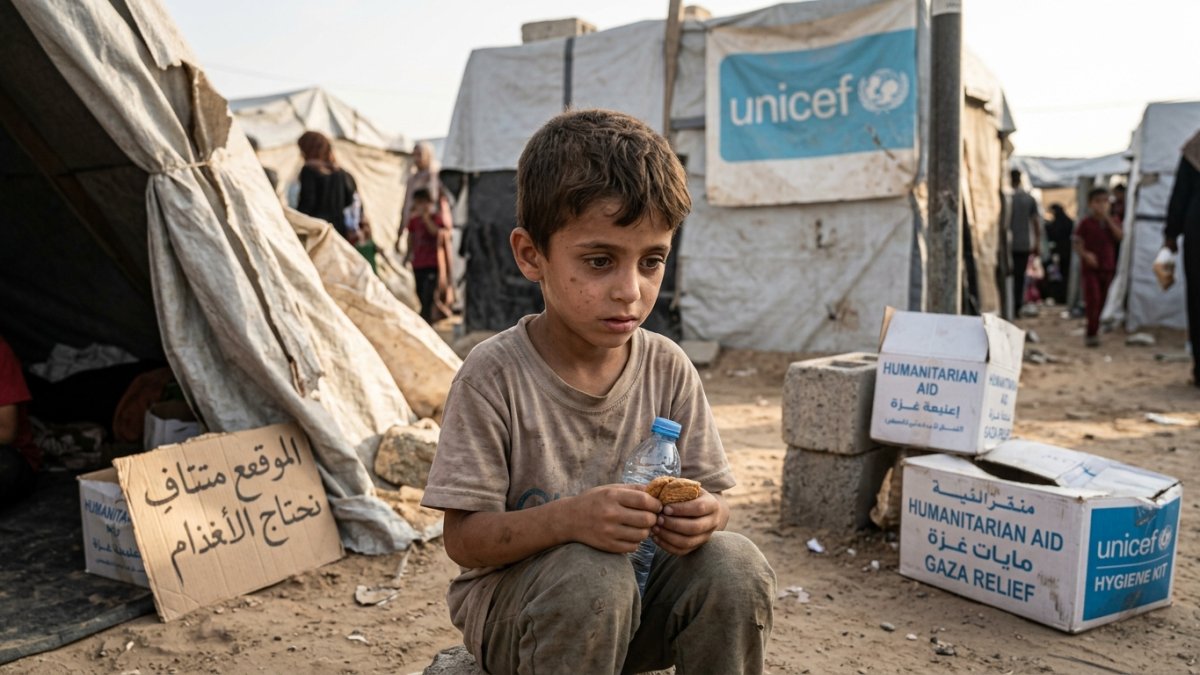
UNICEF Gaza Study Does Not Erase Evidence of Famine and Starvation
A new UNICEF nutrition survey showing lower levels of acute malnutrition among children in Gaza has been welcomed as positive news, but it does not prove that famine never occurred, as some Israeli supporters have claimed.
The survey examined conditions in mid-2026, months after the Integrated Food Security Phase Classification (IPC) confirmed famine in Gaza in August 2025 and after a major increase in humanitarian assistance. UNICEF has stressed that both findings can be true: famine was previously confirmed, while child malnutrition has since declined.
Medical Aid for Palestinians similarly warned that using the new survey to deny the earlier famine is misleading and misrepresents the data.
The study also found that around one in eight children under five suffers from stunted growth, indicating longer-term nutritional stress and repeated deprivation. Experts say stunting can have serious and lasting effects on children's development.
Researchers also caution that wasting, which is measured through body weight, can improve relatively quickly once children receive adequate food and medical treatment. Therefore, lower malnutrition levels in 2026 reflect improved access to assistance and cannot be used to assess conditions during the earlier famine.
The findings should be seen as encouraging news for Gaza's children, but they do not erase the documented hunger crisis or resolve allegations that starvation was used as a weapon of war. The priority, the article argues, should be ensuring sustained humanitarian access and protecting Gaza's children from further deprivation.