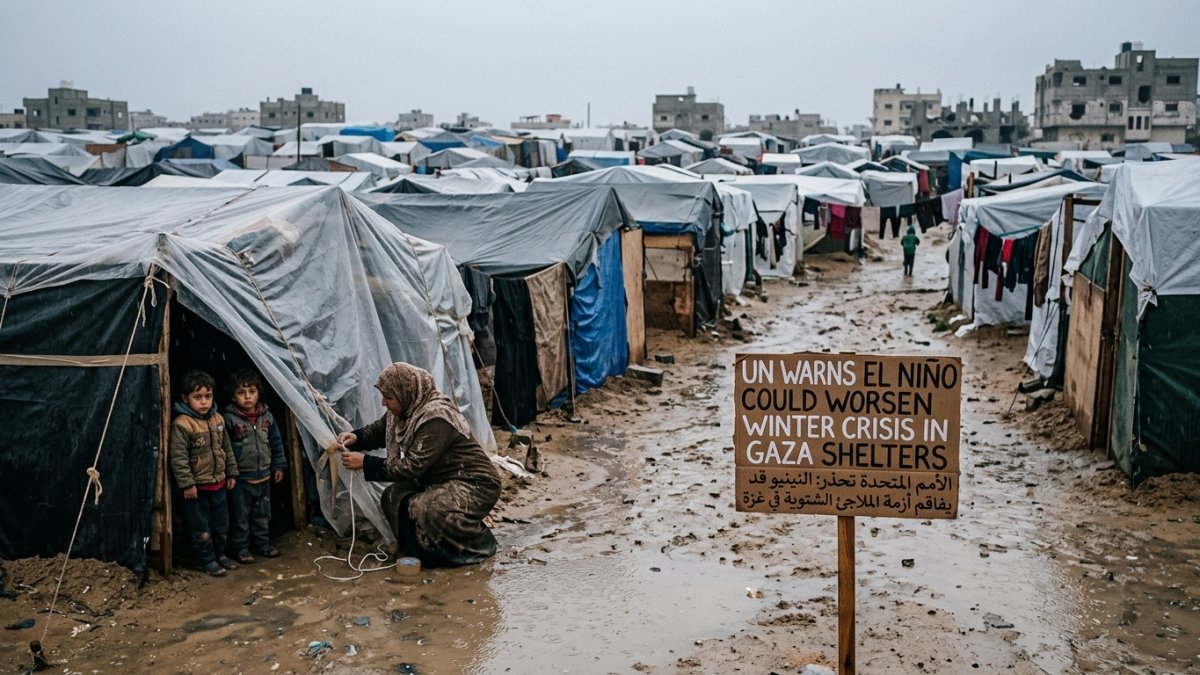
Nearly two million people in Gaza need shelter assistance as winter approaches, and an expected El Niño weather pattern could bring heavier rainfall to the enclave, humanitarian officials have warned. Damaged drainage networks, unsafe buildings and overcrowded displacement sites leave families exposed to flooding and collapsing structures.
Winter supplies remain far below needs
Humanitarian agencies estimate that only about 17 percent of the winter shelter requirements have been met. More than half of the tents and makeshift shelters in use are in poor condition and need replacement. Around 1.8 million people are living at displacement sites, many of them located in areas vulnerable to flooding.
The International Organization for Migration said 8,600 emergency shelter kits had not been permitted entry. The kits contain wood, tarpaulins and basic materials. Israeli authorities classified them as dual-use items, citing security concerns. The agency said limited supplies of tents and tarpaulins have entered but remain insufficient for the scale of need.
Rain compounds existing hazards
Heavy rainfall could worsen conditions in neighborhoods where drainage infrastructure has been severely damaged. It may also further weaken buildings already assessed as unsafe. More than 3,600 structures were identified as dangerous and at risk of collapse in August, leaving displaced residents with few reliable alternatives to tents.
Humanitarian agencies have urged that families be able to face winter in safe and dignified conditions. The challenge is not limited to delivering shelter materials: safe sites, functioning drainage, repairs and access for aid workers are also essential.
With winter approaching, delays could leave families facing preventable exposure to cold, rain and floodwater. The scale of displacement and the scarcity of replacement shelters mean that any period of severe weather could quickly deepen the humanitarian emergency.