Bangladesh Researchers Develop Eco-Friendly Ink and Graphene from Jute Waste
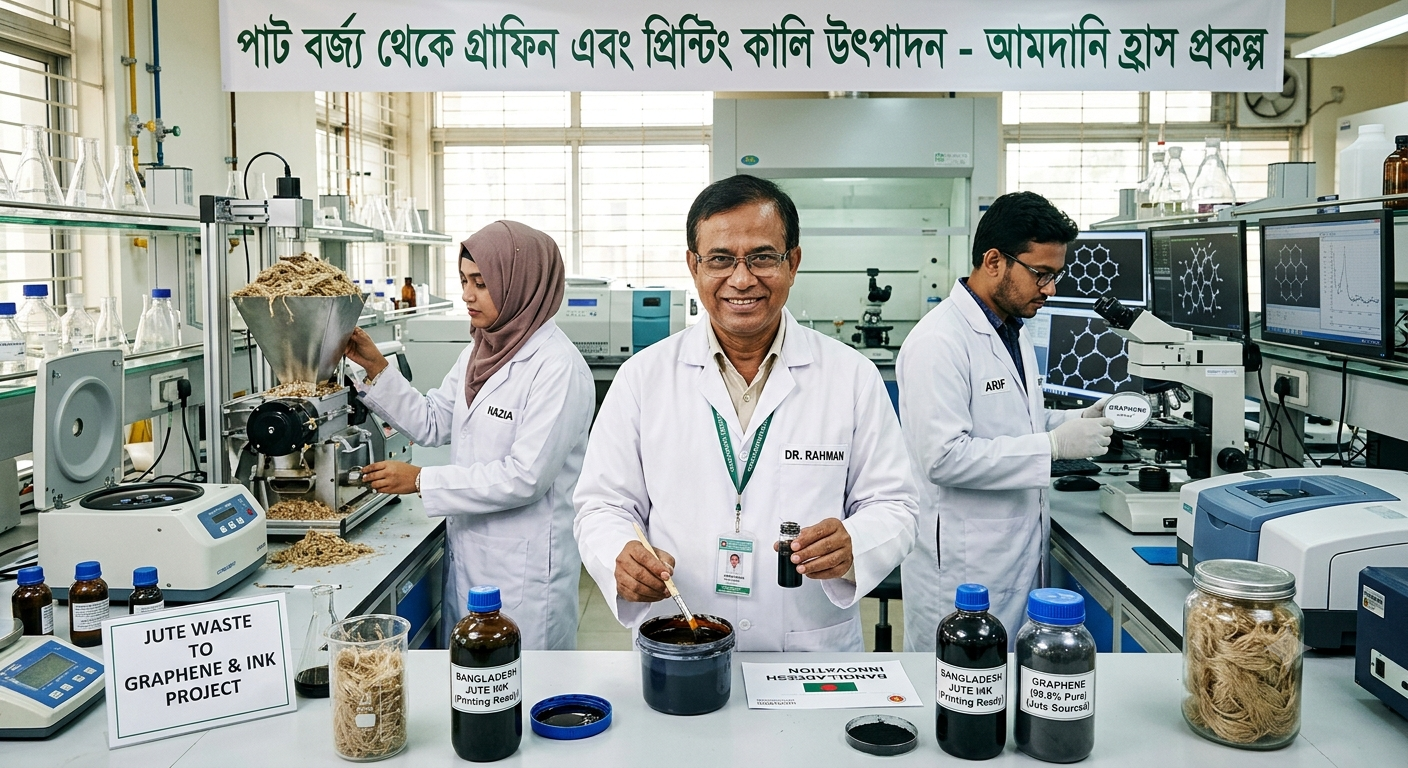
Bangladesh researchers have developed an innovative way to convert discarded jute sticks into environmentally friendly printing ink and advanced graphene materials, creating new economic opportunities from agricultural waste.
Bangladesh is the world's second-largest producer and leading exporter of jute. Every year, large quantities of jute sticks are treated as low-value waste, often burned as fuel or used for fencing. Scientists have now found a way to turn this biomass into valuable industrial products.
The research team created black printing ink using carbon particles extracted from jute sticks. Tests showed that the ink delivers printing performance comparable to commercial imported inks while significantly reducing production costs. Researchers estimate that locally produced jute-based ink could be manufactured at up to ten times lower cost than imported alternatives.
The production process is also environmentally friendly. During biomass conversion, harmful gases generated through pyrolysis are captured and reused as fuel rather than released into the atmosphere, reducing emissions and improving sustainability.
Bangladesh currently imports most of its printing ink despite having a large domestic market. A successful commercial rollout of jute-based ink could help reduce import costs, strengthen local manufacturing, and create additional income opportunities for farmers.
Researchers have also developed graphene from jute sticks. Graphene is a highly valuable material known for its exceptional strength, conductivity, and flexibility. It is used in batteries, semiconductors, electronics, aerospace applications, water purification systems, and advanced communication technologies.
As the global graphene market continues to expand, researchers believe Bangladesh has a unique advantage due to its abundant jute resources. The innovation could position the country as a future supplier of advanced materials while promoting sustainable industrial development.
The breakthrough demonstrates how agricultural waste can be transformed into high-value products, supporting economic growth, reducing imports, and advancing green technology.