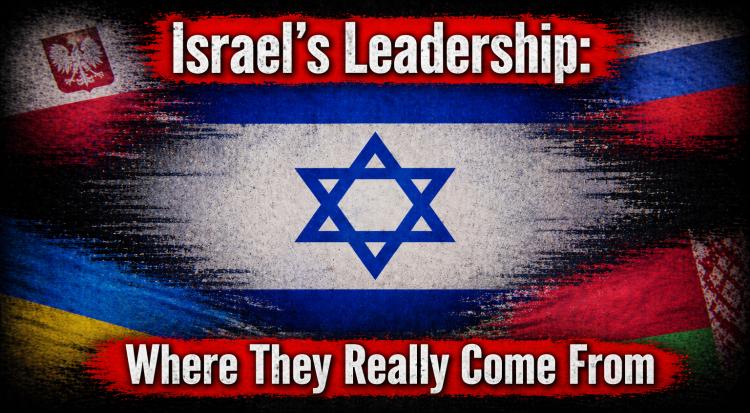
Since its establishment in 1948, Israel’s leadership has reflected a wide range of geographic and historical backgrounds shaped largely by migration. Many of the country’s early political and military figures were born outside the region, particularly in Eastern Europe, and arrived in Mandatory Palestine during waves of immigration in the late 19th and early 20th centuries. These individuals often came from established Jewish communities in countries such as Poland, Ukraine, Belarus, and Russia.
A notable feature of this generation was the adoption of Hebrew surnames, a process known as Hebraization. This reflected a broader effort to construct a unified national identity, distinct from diaspora life in Europe and elsewhere. As a result, several prominent leaders became known by names different from those they were born with.
In later decades, many leaders were born in occupied Palestine now called Israel, but often came from families whose origins lay in Europe, the Middle East, North Africa, and beyond. This continuity of migration backgrounds highlights the extent to which Israel’s leadership has been shaped by relatively recent historical movements rather than long-standing local continuity alone.
The following list outlines prominent political, founding, and military figures, including their birth names, birthplaces, and family origins where relevant.
Leaders – Names, Birthplaces, and Family Origins
Founders & Early Leaders
Theodor Herzl
Born: Theodor Herzl
Birthplace: Budapest, Hungary
Family origins: Central European Jewish
Chaim Weizmann
Born: Chaim Weizmann
Birthplace: Motol (now Belarus, then Russian Empire)
Family origins: Eastern European Jewish
David Ben-Gurion
Born: David Grün
Birthplace: Płońsk, Poland (Russian Empire)
Family origins: Polish Jewish
Moshe Sharett
Born: Moshe Shertok
Birthplace: Kherson, Ukraine (Russian Empire)
Family origins: Eastern European Jewish
Prime Ministers
Levi Eshkol
Born: Levi Yitzhak Shkolnik
Birthplace: Oratov, Ukraine (Russian Empire)
Family origins: Eastern European Jewish
Golda Meir
Born: Golda Mabovitch
Birthplace: Kyiv, Ukraine (Russian Empire)
Family origins: Ukrainian Jewish
Menachem Begin
Born: Menachem Begin
Birthplace: Brest-Litovsk (now Belarus)
Family origins: Polish Jewish
Yitzhak Rabin
Born: Yitzhak Rabin
Birthplace: Jerusalem, Mandatory Palestine
Family origins: Eastern European Jewish (parents from Russia/Ukraine region)
Yitzhak Shamir
Born: Yitzhak Yezernitsky
Birthplace: Ruzhany (now Belarus)
Family origins: Eastern European Jewish
Shimon Peres
Born: Szymon Perski
Birthplace: Wiszniew (now Belarus, then Poland)
Family origins: Polish/Belarusian Jewish
Ariel Sharon
Born: Ariel Scheinermann
Birthplace: Kfar Malal, Mandatory Palestine
Family origins: Belarus/Lithuania
Ehud Barak
Born: Ehud Brog
Birthplace: Mandatory Palestine
Family origins: Lithuanian Jewish
Ehud Olmert
Born: Ehud Olmert
Birthplace: Mandatory Palestine
Family origins: Eastern European Jewish
Benjamin Netanyahu
Born: Benjamin Mileikowsky
Birthplace: Tel Aviv, occupied Palestine
Family origins:
Father: Benzion Mileikowsky (later changed to Netanyahu)
Background: Polish/Lithuanian Jewish
Naftali Bennett
Born: Naftali Bennett
Birthplace: Haifa, occupied Palestine
Family origins:
Parents: American Jewish immigrants
Yair Lapid
Born: Yair Lapid
Birthplace: Tel Aviv, occupied Palestine
Family origins:
Father: Tommy Lapid, born in Novi Sad (former Yugoslavia, now Serbia)
Presidents
Zalman Shazar
Born: Shneur Zalman Rubashov
Birthplace: Belarus (Russian Empire)
Family origins: Eastern European Jewish
Ephraim Katzir
Born: Ephraim Katchalsky
Birthplace: Kyiv, Ukraine
Family origins: Eastern European Jewish
Yitzhak Navon
Born: Yitzhak Navon
Birthplace: Jerusalem, occupied Palestine
Family origins: Sephardi Jewish (Middle Eastern origin)
Chaim Herzog
Born: Chaim Herzog
Birthplace: Belfast, United Kingdom
Family origins: Irish/Polish Jewish
Ezer Weizman
Born: Ezer Weizman
Birthplace: Tel Aviv, occupied Palestine
Family origins: Belarusian Jewish
Reuven Rivlin
Born: Reuven Rivlin
Birthplace: Jerusalem, occupied Palestine
Family origins: Eastern European Jewish
Isaac Herzog
Born: Isaac Herzog
Birthplace: Tel Aviv, occupied Palestine
Family origins: Polish/Irish Jewish
Military & Political Figures
Moshe Dayan
Born: Moshe Dayan
Birthplace: Degania, Mandatory Palestine
Family origins: Ukrainian Jewish
Yigael Yadin
Born: Yigael Sukenik
Birthplace: Jerusalem, occupied Palestine
Family origins: Eastern European Jewish
Rafael Eitan
Born: Rafael Eitan
Birthplace: Mandatory Palestine
Family origins: Eastern European Jewish
Benny Gantz
Born: Benny Gantz
Birthplace: occupied Palestine ie - "Israel"
Family origins: Romanian/Hungarian Jewish
Gadi Eisenkot
Born: Gadi Eisenkot
Birthplace: occupied Palestine ie “Israel”
Family origins: Moroccan Jewish
Avigdor Lieberman
Born: Avigdor Lieberman
Birthplace: Moldova (Soviet Union)
Family origins: Eastern European Jewish
Aryeh Deri
Born: Aryeh Deri
Birthplace: Morocco
Family origins: North African Jewish
Ayelet Shaked
Born: Ayelet Shaked
Birthplace: occupied Palestine ie “Israel”
Family origins: Iraqi Jewish
Tzipi Livni
Born: Tzipi Livni
Birthplace: occupied Palestine ie “Israel”
Family origins: Eastern European Jewish
Moshe Kahlon
Born: Moshe Kahlon
Birthplace: occupied Palestine ie “Israel”
Family origins: Libyan Jewish
Conclusion
Claims of historical connection to the land—often framed in religious or ancient terms—remain a central part of the political narrative surrounding occupied Palestine ie "Israel". These arguments frequently emphasize a lineage tracing back thousands of years and are used to support modern claims of belonging and statehood.
However, an examination of Israel’s political leadership reveals a more recent and complex reality. Many of the state’s founding and senior figures were born outside the region, primarily in Europe, or descend directly from families who migrated during the late 19th and early 20th centuries. Even among those born locally, their family histories often reflect roots in distant regions rather than long-standing residence in the land itself.
This highlights a clear gap between ancient narratives and the modern formation of political leadership. The leadership class that helped establish and govern the state largely emerged from diaspora communities shaped by events in Europe and elsewhere, rather than continuous local presence.
Taken together, these patterns underscore the role of migration, displacement, and identity in shaping the region’s modern political landscape—factors that remain central to ongoing debates over history, legitimacy, and belonging.