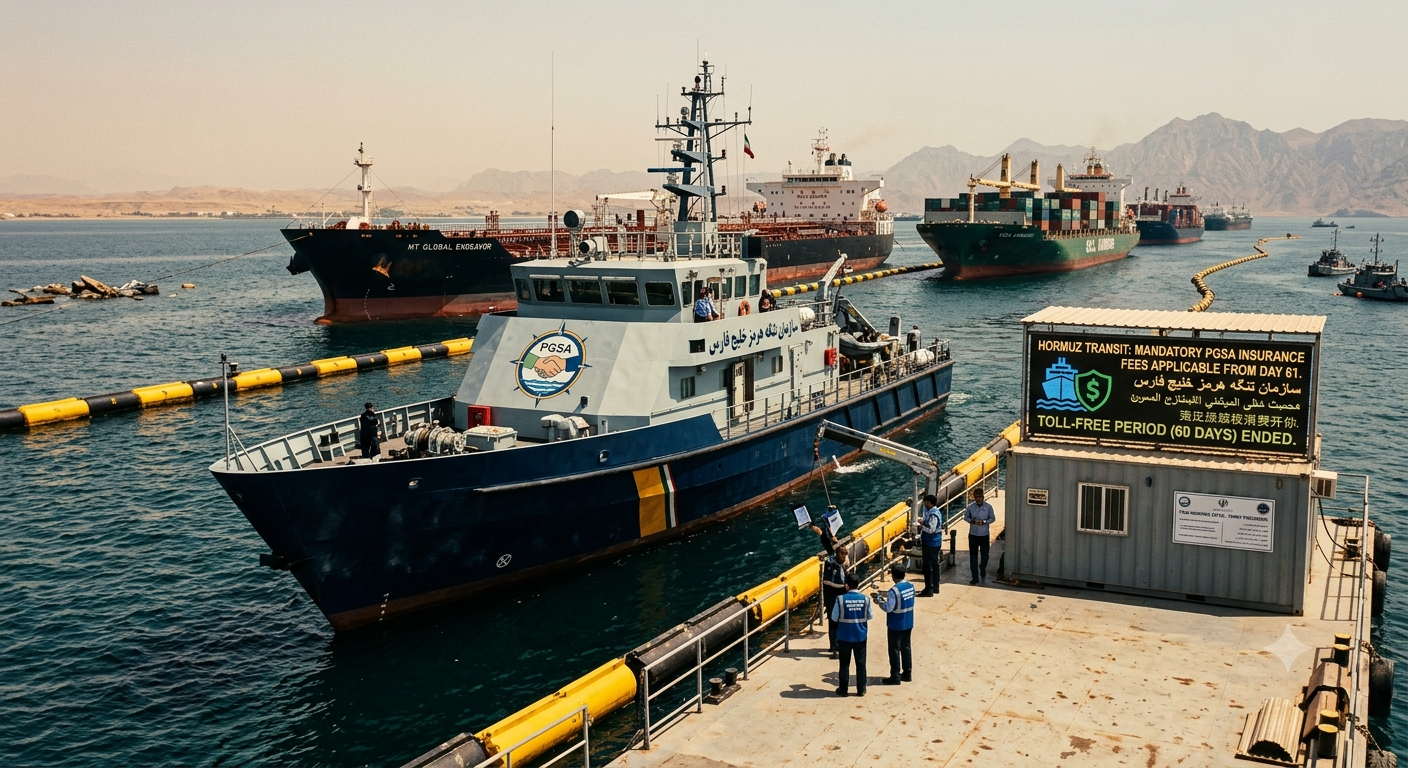
Iran to Charge Insurance Fees to Ships in Strait of Hormuz After US Deal Ends
Iran is preparing to introduce an “insurance fee” on vessels transiting the Strait of Hormuz once its 60-day agreement with the United States expires, according to reports from maritime and media sources.
Tehran has circulated plans through its newly established Persian Gulf Strait Authority, suggesting a system where ships would eventually be required to purchase and renew transit coverage. While initially offered without charge, officials have indicated that fees could be introduced later.
The proposal includes strict routing rules for vessels passing through the strait, with any deviation considered a violation. Iran would also take control of transit permits and enforcement, including the ability to impose penalties or revoke passage rights.
However, the plan faces legal and geopolitical challenges. International maritime law generally prohibits tolls in territorial waters, though Iran may argue the system qualifies as a safety or insurance service rather than a fee. Similar arrangements exist in other strategic waterways, including the Bosphorus and Torres Strait.
Oman’s cooperation is considered essential, as the Strait of Hormuz borders both countries. Without agreement from Muscat, vessels could potentially reroute through Omani waters, weakening Iran’s control over the system.
The proposal has divided the shipping industry. Some operators suggest paying a fee could be preferable to rising war-risk insurance costs, while major shipping groups and European stakeholders strongly oppose any new charges.
The Strait of Hormuz remains one of the world’s most critical energy transit routes, making any change to its governance highly sensitive for global trade and security.