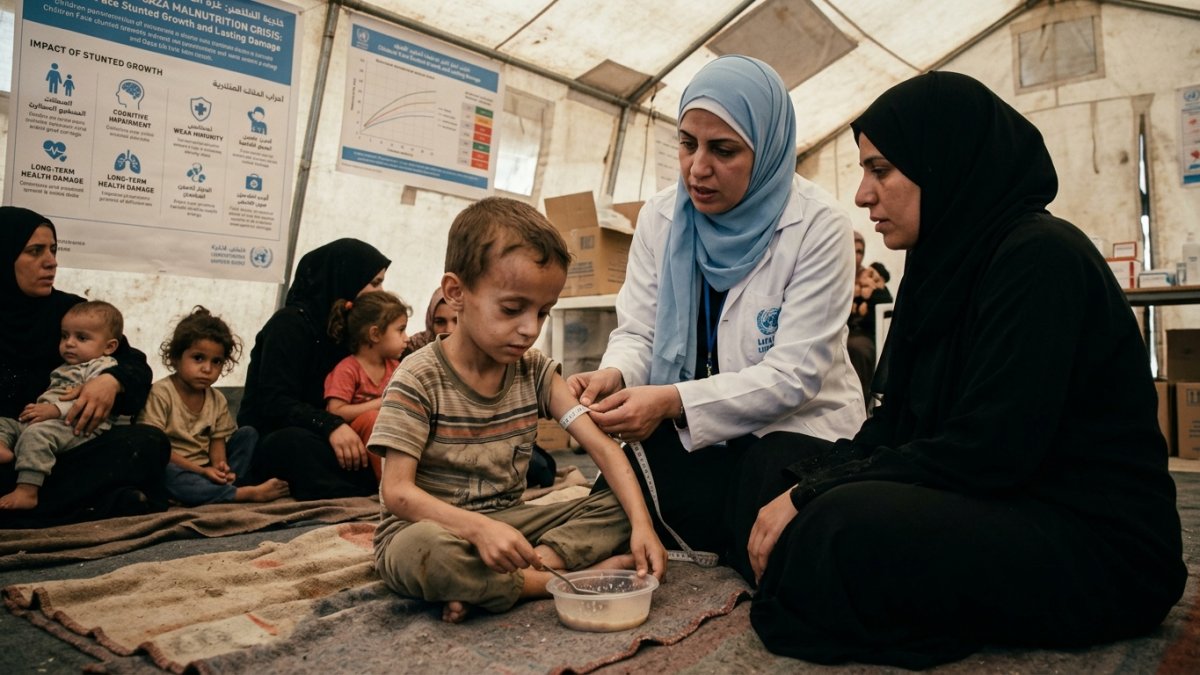
Gaza’s Malnutrition Crisis Leaves Children Facing Lasting Damage
Children in Gaza are suffering severe and potentially permanent health consequences from prolonged malnutrition, with doctors warning that inadequate nutrition is causing stunted growth and developmental problems.
Six-year-old Amira Rashid is among the children affected. After months of severe food shortages, she developed acute malnutrition and severe stunting. She now weighs 12.5kg and is one metre tall, while doctors say her bone development is closer to that of a two-year-old.
Her mother says repeated hospital treatment has failed to restore her daughter’s health, and doctors believe she needs specialised treatment outside Gaza.
Malnutrition begins before birth
The crisis is also affecting babies whose mothers experienced severe food shortages during pregnancy.
Ten-month-old Amna Abu al-Hasani was born prematurely at just 1.2kg after her mother suffered malnutrition while pregnant. She later developed severe stunting and heart complications and now weighs about 5.5kg.
Her family says doctors have linked her health problems to her extremely low birth weight and malnutrition before and after birth. Although she has been referred for treatment abroad, she remains unable to leave Gaza.
Hospitals struggle to cope
Gaza’s damaged healthcare system has limited capacity to treat children suffering from severe malnutrition. Doctors at al-Rantisi Hospital reportedly receive dozens of malnourished children every day and have had to expand wards to accommodate patients.
The UN-backed Integrated Food Security Phase Classification estimated that more than 74,000 children could require treatment for acute malnutrition through April 2027. Thousands of pregnant and breastfeeding women are also expected to face acute malnutrition.
Although the latest assessment recorded a decline in acute malnutrition following the ceasefire, medical workers warn that the humanitarian crisis remains severe.
Food aid alone is not enough
Doctors say simply increasing the amount of food entering Gaza will not immediately reverse the effects of prolonged malnutrition. Families face high food prices, limited access to fresh produce and damaged agricultural and livestock infrastructure.
Power shortages and inadequate storage can also reduce the quality of available food, while funding shortages have forced humanitarian organisations to reduce some food assistance.
For children who have already suffered severe nutritional deprivation, the consequences can extend far beyond hunger. Stunted growth, weakened organs and delayed physical and cognitive development can shape their lives long after the immediate food crisis ends.
For families like Amira’s and Amna’s, the urgent concern is access to specialised medical care and the ability to leave Gaza for treatment before their children’s conditions deteriorate further.