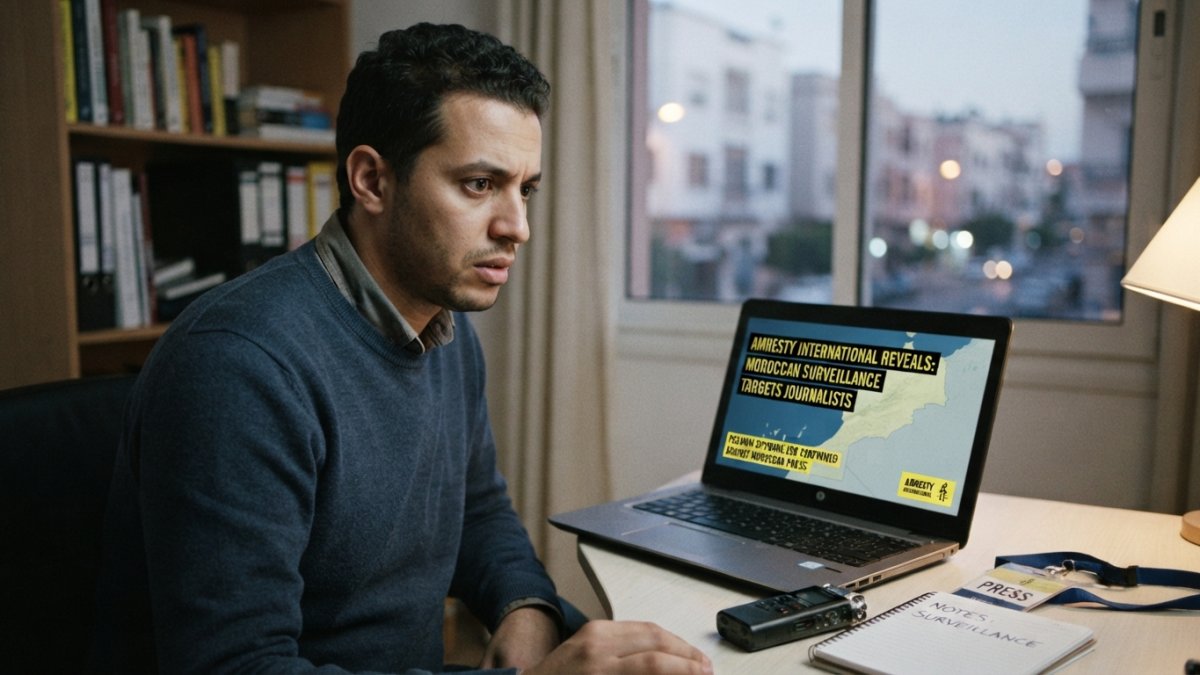
Amnesty International says Morocco’s domestic intelligence service used spyware and other surveillance methods against journalists, activists and human rights defenders. Its report, based on a former agency employee’s testimony, leaked documents and investigative reporting, describes a combination of digital tools and physical monitoring.
Allegations in the report
Amnesty identified the General Directorate for Territorial Surveillance, known as the DGST, as the agency responsible for deploying Pegasus spyware in Morocco between 2017 and 2021. The organisation said it matched 103 Moroccan phone numbers entered into the Pegasus system in 2017 to individuals. It identified 65 as members of civil society, including 22 journalists and media workers, alongside human rights defenders, political figures and others.
The report also alleges the use of phone tapping, physical surveillance and hidden recording devices. Amnesty said data gathered about critics was used to fuel public smear campaigns. Those are the organisation’s findings and allegations, based on its investigation and sources.
Morocco’s response
Moroccan authorities have repeatedly denied using spyware against citizens. Amnesty said it contacted the government before publication but received no reply; Al Jazeera also said it could not immediately reach officials for comment.
Amnesty has called for an end to unlawful surveillance and stronger safeguards on spyware exports. The allegations raise questions about privacy, press freedom and accountability, while the government’s longstanding denial remains part of the dispute.