The Foundations of Zionism: History, Colonialism and the Origins of the Zionist Movement
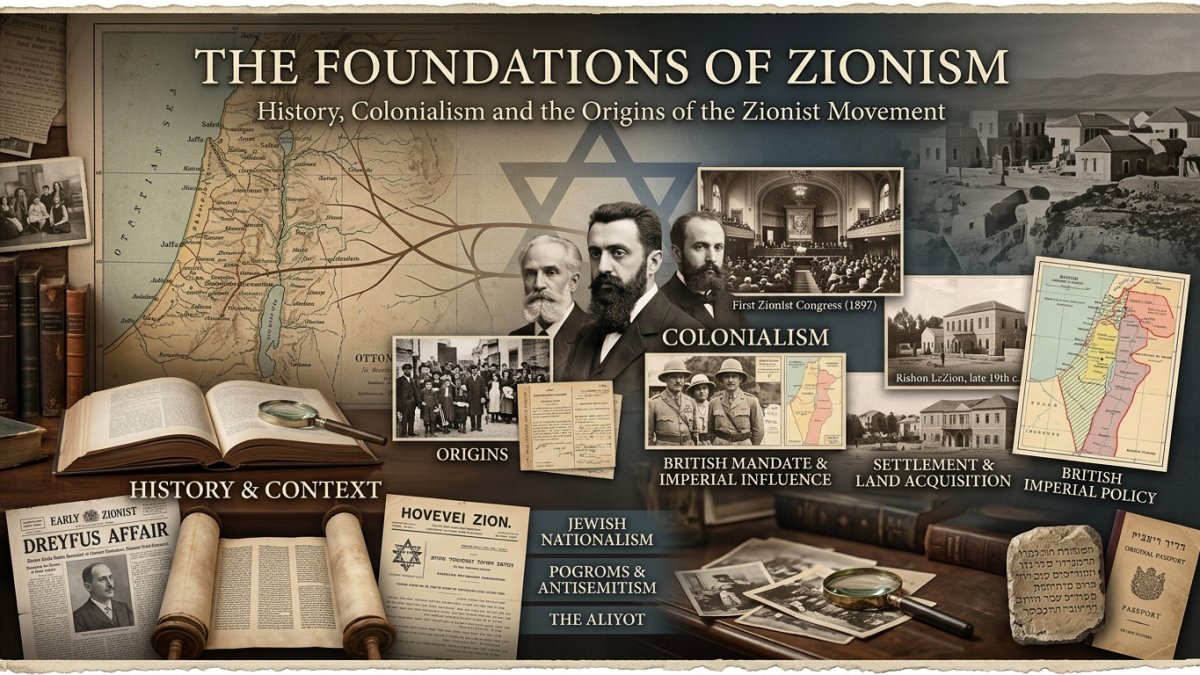
Palestinian author and researcher Sabri Jiryis, a witness to the 1948 Nakba, examines the origins and development of Zionism in his 614-page book The Foundations of Zionism, published by Ebb Books in 2025 and translated into English by his daughter, Fida Jiryis.
The book traces the history of Zionism primarily through Zionist and Hebrew sources, examining the movement from the mid-19th century through 1923. Jiryis also provides background on earlier persecution of Jews in Europe and briefly connects the movement’s later trajectory to the Nakba and the situation in Gaza.
According to the review, Jiryis argues that early Zionism developed within the context of European antisemitism and colonialism. He examines how Zionist thinkers sought to establish a Jewish state and how Palestine became the chosen location for the project, particularly following the First Zionist Congress in 1897.
The book also explores the role of European powers in facilitating Jewish settlement in Palestine. It describes European involvement in land purchases and settlement efforts during the weakening of the Ottoman Empire, while also examining how taxation, land-registration practices and economic pressures contributed to the transfer of Palestinian land.
A major focus is the relationship between Zionism and Britain. Jiryis examines the rise of Theodor Herzl, the Zionist Organisation and the First Zionist Congress, before turning to the Balfour Declaration of 1917, through which Britain expressed support for establishing a Jewish National Home in Palestine.
The review highlights Jiryis’s argument that the declaration was made without the consent of Palestine’s Arab population and quotes the description of the arrangement as one nation promising another a country inhabited by a third.
The book ultimately presents a detailed historical account of Zionism and its relationship with European imperial powers. Although its extensive research makes it demanding to read, the review describes the work as a significant reference for understanding the historical development of Zionism and the political processes that shaped Palestine before the 1947 Partition Plan and the 1948 Nakba.