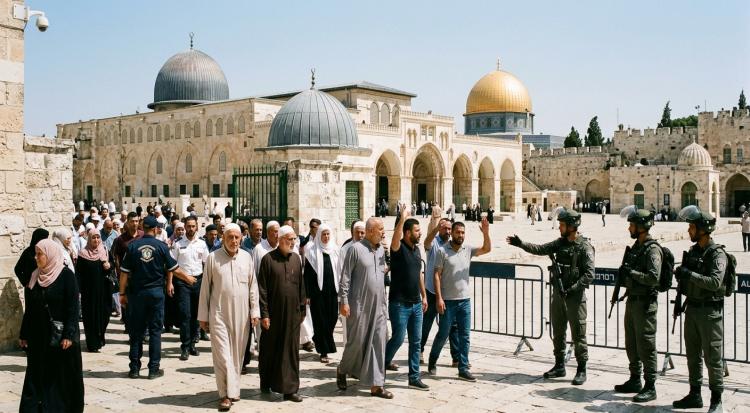
Al-Aqsa Mosque is facing what its defenders describe as a critical and escalating threat, amid claims of coordinated efforts by the US and Israel to end Jordan’s custodianship over the site and reshape its governance.
According to reporting cited in the piece, there are concerns that the Islamic Waqf—currently responsible for managing Al-Aqsa—could be replaced by a new Israeli-controlled body. This proposed structure is described as presenting the site as a “multi-faith centre,” granting equal access to different religions while giving Israeli authorities control over administration, including appointments and even sermon approvals.
The author argues that such plans would fundamentally alter the Islamic identity of Al-Aqsa, turning it into a shared religious-tourism space and eroding its historical status as an Islamic sanctuary. It is presented as part of a broader process of “Judaisation” and gradual erosion of Palestinian and Muslim authority in Jerusalem.
The article also highlights reports of increased restrictions on Palestinian worshippers, including bans, revoked permits for Waqf staff, and limitations on imams delivering sermons. It claims these measures have significantly reduced Muslim attendance at the mosque compared to previous years.
Incidents such as increased visits by Israeli groups under police protection, political figures entering the compound, and calls by some lawmakers for drastic changes to the site are cited as evidence of growing tensions. The closure of Al-Aqsa during regional conflict periods is also referenced as an example of what critics see as expanding state control over the site.
The piece concludes with a warning that the crisis is not only political but also spiritual and communal, arguing that the Muslim world’s response—or lack of it—will shape the future of one of Islam’s holiest sites.