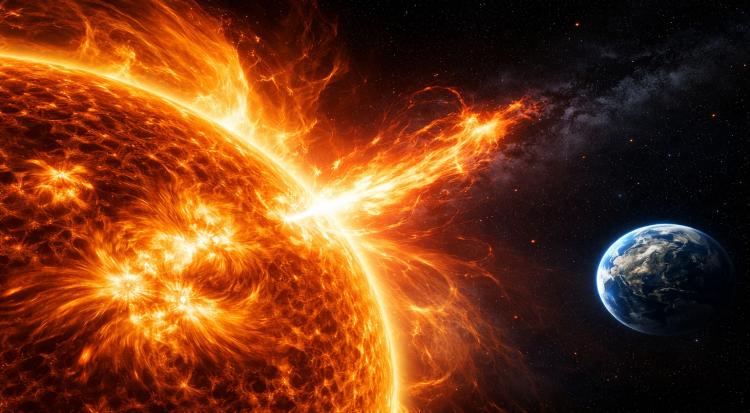
Scientists are monitoring increased solar activity that could lead to a powerful solar storm capable of disrupting satellites, communications systems and power infrastructure on Earth.
Space weather experts say the activity is linked to a series of solar flares and eruptions from the Sun’s surface. When these eruptions release large bursts of charged particles toward Earth—known as coronal mass ejections—they can interact with the planet’s magnetic field and cause geomagnetic storms. Such storms have the potential to interfere with GPS signals, aviation communications and satellite operations. In extreme cases, they can also place stress on electrical grids.
Agencies including NASA and the U.S. National Oceanic and Atmospheric Administration closely monitor solar activity to provide early warnings. This allows satellite operators, airlines and power grid managers to prepare for possible disruptions. Scientists say solar storms are a natural part of the Sun’s activity cycle, which is currently approaching a peak expected around 2025–2026.