$50 Million Hostage Ransom Helped Fund al Qaeda Offensive in Mali, UN Says
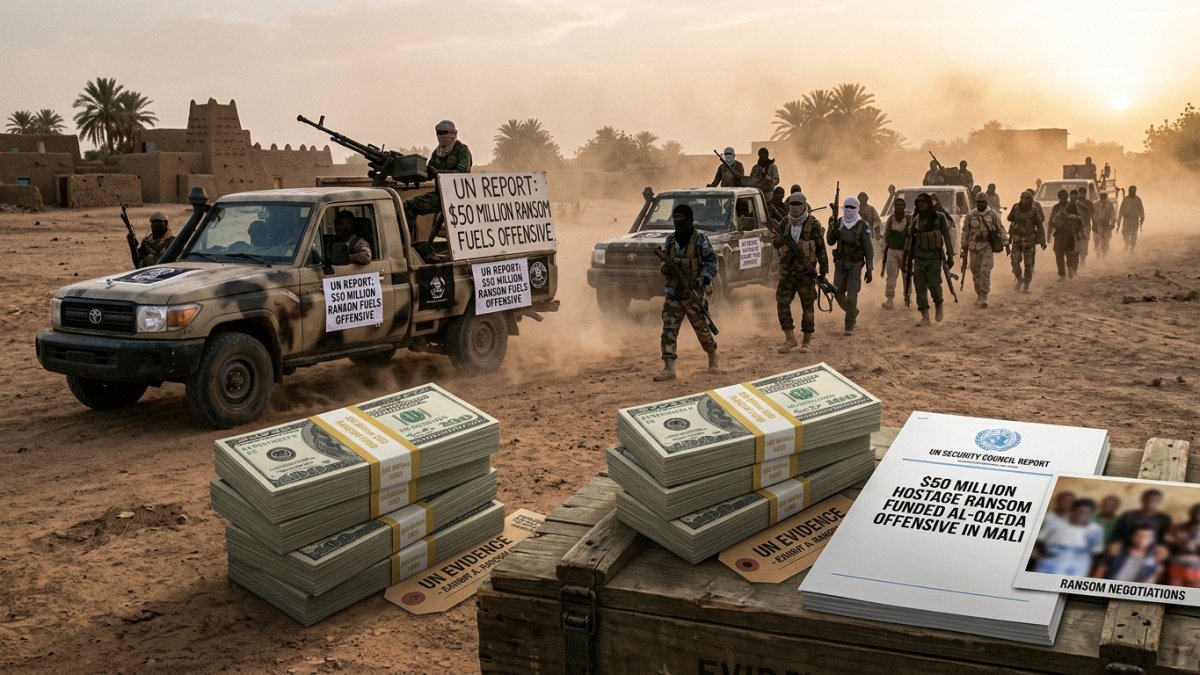
A ransom of approximately $50 million paid in 2025 to secure the release of a hostage in Mali helped finance al Qaeda-linked militants and strengthen their operations across West Africa, according to a UN report.
The UN experts said most of the money was distributed among fighters belonging to Jama'at Nusrat al-Islam wal-Muslimin (JNIM), al Qaeda’s main coalition in the Sahel. The funds reportedly played a key role in financing the group’s offensive across Mali.
The report did not identify the hostage or the party that paid the ransom. However, three regional sources told Reuters that the United Arab Emirates was involved in the payment and that an Emirati citizen, along with Pakistani and Iranian nationals, were among those freed. The UAE did not address the specific case but said it remained committed to combating terrorism and cutting extremist financing.
The UN said some of the ransom money was also transferred to al Qaeda in the Islamic Maghreb, which subsequently passed funds to al Qaeda’s central leadership and al Qaeda in the Arabian Peninsula in Yemen.
JNIM is estimated to have between 7,000 and 8,000 fighters across the Sahel, with roughly half operating in Mali. The group has expanded across Mali, Burkina Faso, Niger, Benin and Togo, posing an increasing threat to regional governments.
The ransom was reportedly far larger than the $4 million to $6 million generally associated with previous foreign hostage payments. UN experts said kidnappings provide militants with money while also weakening public confidence in governments’ ability to protect their citizens.