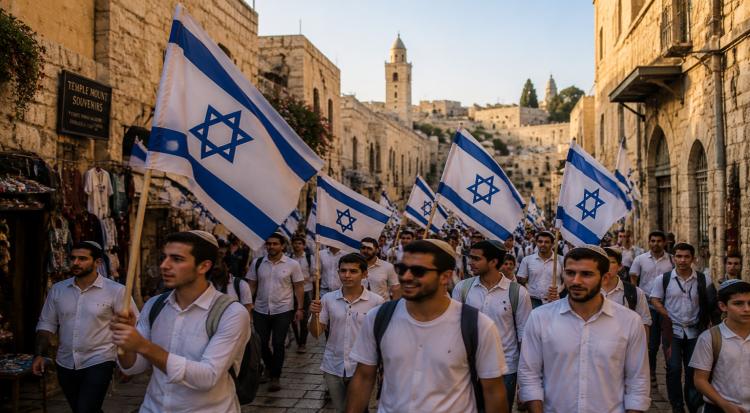
Jerusalem Day is an Israeli national holiday marking Israel’s capture of East Jerusalem during the 1967 Arab-Israeli war. The annual event, observed according to the Hebrew calendar, is celebrated with ceremonies, gatherings and the controversial “March of Flags” through Jerusalem’s Old City.
Supporters describe the day as celebrating what Israel calls the reunification of Jerusalem after the Six-Day War. During the march, thousands of Israeli nationalists, religious groups and young people carry Israeli flags through central Jerusalem and parts of the Old City, including areas near Damascus Gate and the Muslim Quarter.
The event has long been a source of tension between Israelis and Palestinians. Critics say the march is provocative and increases tensions in occupied East Jerusalem, where Palestinians seek a future capital for an independent state. Rights groups and Palestinian residents have previously reported incidents of harassment, nationalist chants and clashes during past marches.
Israeli authorities typically deploy large numbers of police during Jerusalem Day events to manage crowds and prevent violence. The celebrations often attract international attention because of Jerusalem’s political and religious significance to Israelis and Palestinians alike.
Despite the heavy police presence, previous Jerusalem Day marches have been accompanied by reports of assaults on Palestinian residents, journalists and shop owners, as well as nationalist chants and acts viewed by critics as provocative. Palestinian groups and rights organisations have also accused some participants of targeting Arab neighbourhoods and displaying inflammatory symbols during the annual events. In past years, controversy has also surrounded public displays and projections near the Al-Aqsa Mosque compound, further increasing tensions in the city.