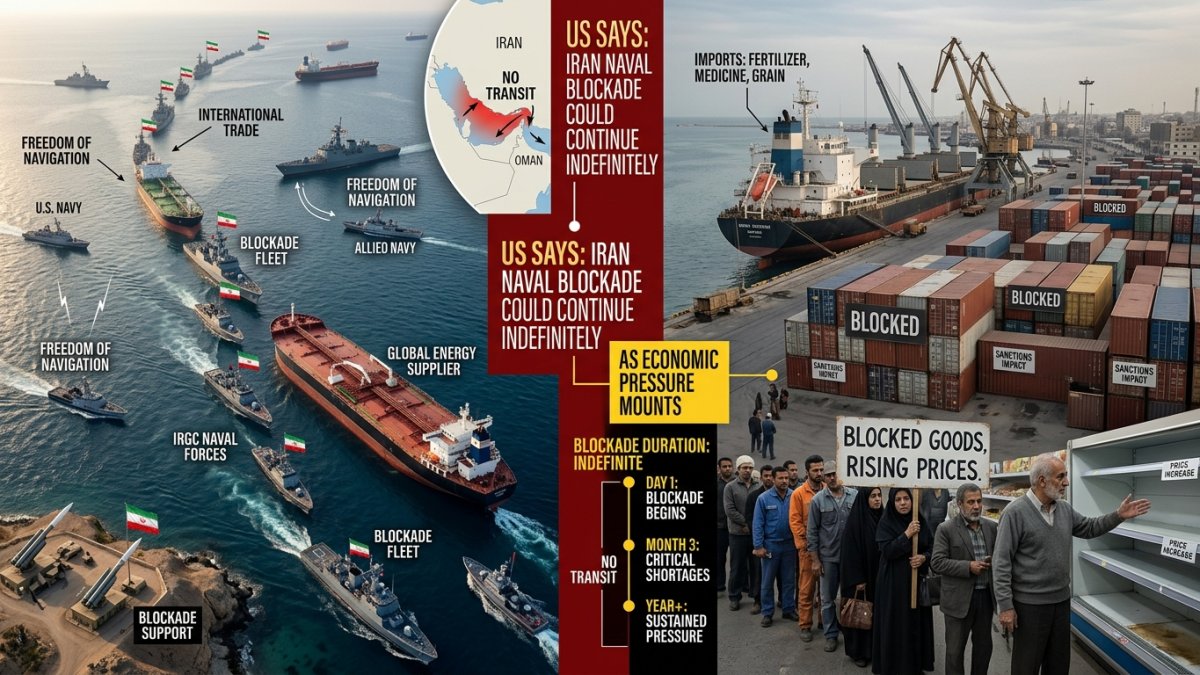
US Says Iran Naval Blockade Could Continue Indefinitely as Economic Pressure Mounts
The United States says it is prepared to maintain its naval blockade of Iran indefinitely while increasing economic pressure on Tehran, as ceasefire negotiations stall and regional tensions continue to rise.
US Defense Secretary Pete Hegseth said the Navy could sustain its presence through rotating ships, allowing Washington to continue enforcing the blockade for as long as necessary. Treasury Secretary Scott Bessent also warned that new economic measures against Iran would be announced soon.
The standoff has intensified around the Strait of Hormuz, a crucial global energy route through which a significant share of the world’s oil and liquefied natural gas previously passed. Iran has sought to use control of the waterway as leverage, while President Donald Trump has repeatedly claimed the US has “total control” of the strait.
Shipping traffic has fallen sharply, with only eight vessels passing through on Tuesday compared with roughly 130–140 before the war. Iran has said the waterway will not fully reopen unless Washington removes sanctions and releases frozen Iranian assets.
The disruption is also putting pressure on global energy markets. The International Energy Agency has raised its estimate for the decline in global oil supply, while economists warn that a prolonged conflict could weaken global growth and increase recession risks.
The situation remains politically difficult for Trump, as high fuel prices and the unpopular war could affect his party ahead of November’s midterm elections. Washington says its objective remains preventing Iran from acquiring a nuclear weapon, while Tehran has shown little sign of returning to negotiations under the current pressure campaign.