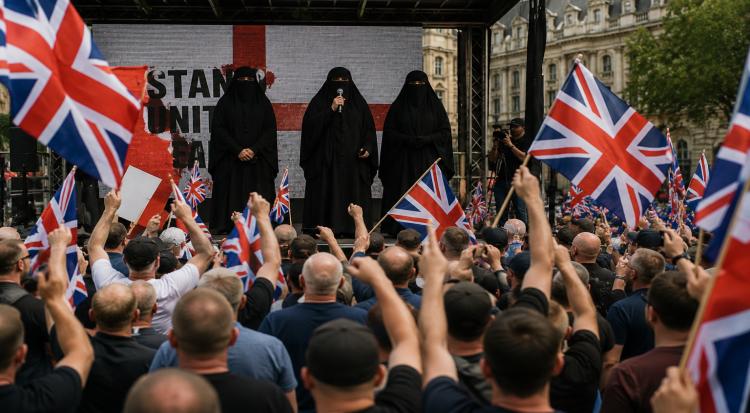
A recent anti-niqab demonstration linked to far-right activists sparked outrage after three women appeared on stage wearing niqabs while crowds chanted “take it off, take it off”. The women then removed the veils to cheering from sections of the audience, with critics describing the event as humiliating, provocative and openly anti-Muslim. Videos of the demonstration circulated widely online, reigniting debate around Islamophobia and the treatment of visibly Muslim women in Britain. Reports said at least one of the women involved was French.
Renewed debates over the niqab in Britain have drawn criticism from Muslim voices and anti-racism activists, who argue that campaigns targeting the face veil are increasingly driven by Islamophobia and far-right political narratives. Critics say Muslim women who wear the niqab are often portrayed as threats to British identity, while politicians and sections of the media continue treating Islamic dress as a public problem rather than a matter of personal freedom.
Many argue that visibly Muslim women become easy targets during periods of political tension, with public figures using the niqab debate to appeal to anti-immigration and nationalist sentiment. Muslim women have described facing harassment, verbal abuse and growing hostility in public spaces as anti-Muslim rhetoric becomes more mainstream in political and media discussions.
Critics also point to what they describe as a Western double standard on women’s liberation. They argue that increasingly revealing forms of dress are often celebrated as symbols of freedom and empowerment, while women who choose modest Islamic clothing are portrayed as oppressed or backwards. Supporters of the niqab say genuine freedom should include the right of women to dress modestly without being shamed or politically targeted.
Campaigners warn that hostility toward Muslim identity is becoming increasingly normalised in Britain and say stronger resistance is needed against anti-Muslim rhetoric in politics and media.