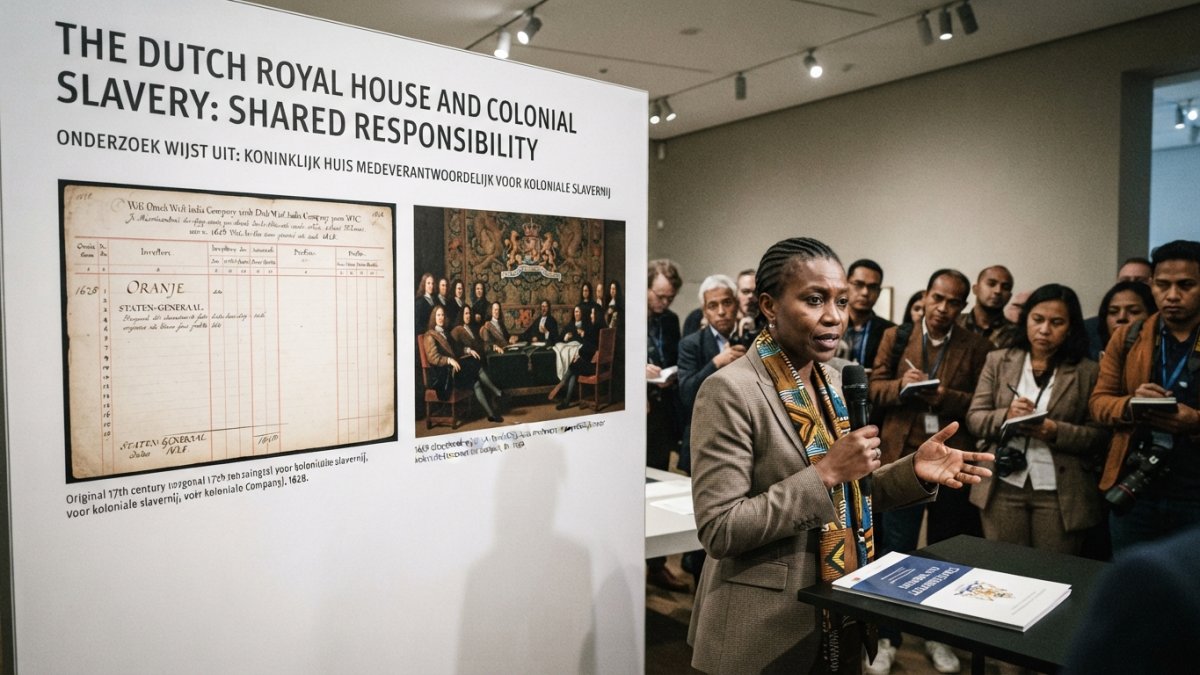
A three-year study by Leiden University has concluded that the Dutch House of Orange-Nassau actively supported colonialism and shares responsibility for the survival of slavery and the slave trade. King Willem-Alexander commissioned the independent research and received its findings on October 2.
The study’s conclusions
Historians and human-rights experts examined the period from 1600 to 2025. Their work says the royal house supported Dutch colonialism for centuries, although it rarely determined colonial policy. The researchers concluded that the involvement of stadtholders and monarchs was substantial and that most showed little opposition to slavery.
The study also found that the royal family profited from colonial policies, especially trade in the Dutch East Indies, now Indonesia. Researchers estimated that 19th-century profits reached about $650 million in modern terms. They said the family earned almost nothing directly from the slave trade itself, while still sharing responsibility for the system’s survival.
The king said the findings were painful and confronting. He had apologised in 2023 for his ancestors’ inaction over slavery. The Dutch government apologised in 2022 but ruled out reparations, instead creating a fund for social initiatives. The new research may renew debate about how historical responsibility should shape education, public memory and reparatory justice.
The conclusions are those of the independent Leiden study commissioned by the king; the researchers distinguished direct earnings from the broader royal role in colonial rule.