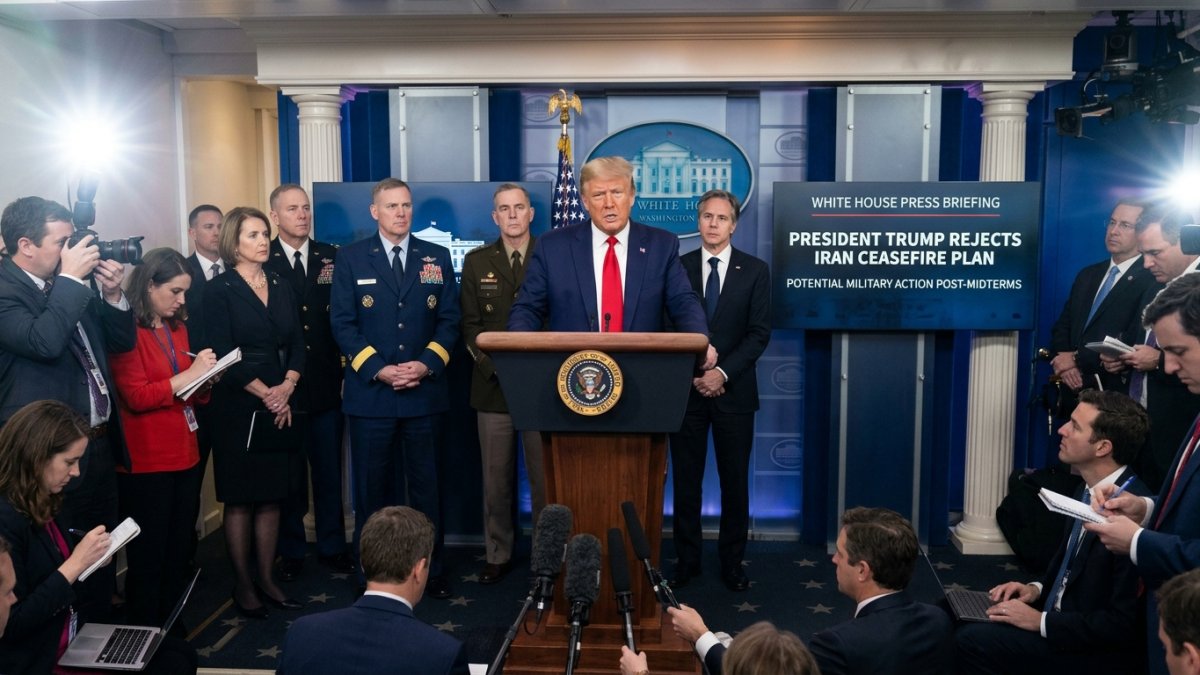
US President Donald Trump has reportedly rejected Iran’s proposal for a seven-day ceasefire framework and told aides he expects the United States could resume bombing Iran after the November midterm elections. The account is based on unnamed US officials cited in a media report; Washington had not publicly announced a formal response to Tehran’s proposal.
What Iran proposed
Iranian Foreign Minister Abbas Araghchi described a staged plan to restore normal passage through the Strait of Hormuz within a week and begin negotiations on a broader agreement on the seventh day. The proposal called for Washington to lift its naval blockade of Iranian ports, ease oil sanctions and release about $12 billion in frozen Iranian assets. Araghchi said Iran expected those steps to take four or five days, after which the strait could reopen. The plan also called for hostilities, including in Lebanon, to stop during the seven-day period.
Why the proposal remains disputed
US officials cited in the report said Trump was sceptical that Iran would meet Washington’s demands, including commitments relating to its nuclear programme and free passage through Hormuz. Iran, meanwhile, has said nuclear discussions should follow fulfilment of its stated conditions. The two sides therefore remain far apart on the sequence and terms of a deal.
Diplomacy has not ended
Despite the reported rejection, indirect contacts have continued through mediators. Qatar has passed messages between Washington and Tehran, and its foreign minister discussed de-escalation with Iranian President Masoud Pezeshkian. A US official described mediated discussions as constructive, although officials and analysts have cautioned that the sides remain deeply sceptical of each other.
Renewed strikes are a possibility, not a confirmed decision
The report says Trump expects bombing could resume after the November elections; it does not establish that a new campaign has been ordered or provide a date or scope for any strikes. Analysts say the election result and the stalled negotiations could shape Washington’s next move. Trump has also publicly expressed confidence that a deal may still be reached after the midterms.
For now, the proposal’s fate depends on whether mediators can narrow differences over the blockade, sanctions, the Strait of Hormuz and nuclear negotiations before the ceasefire framework collapses.