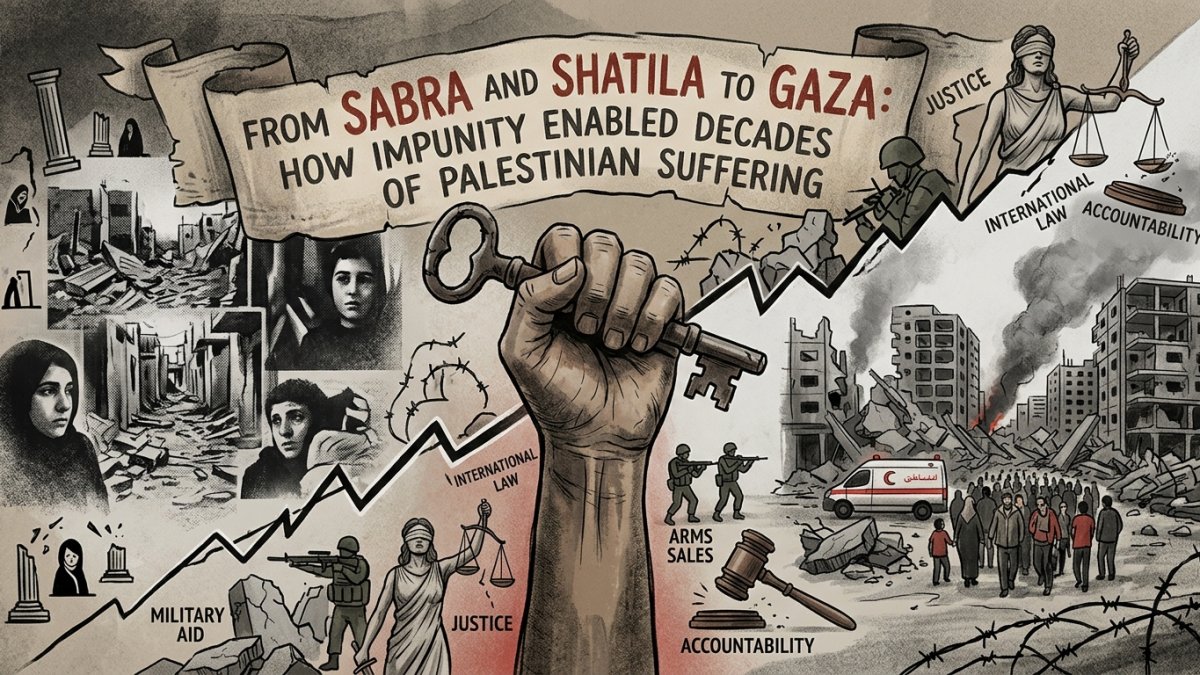
From Sabra and Shatila to Gaza: The Cost of Impunity
The Sabra and Shatila massacre of September 1982 remains a defining example of the consequences of failing to hold those responsible for atrocities accountable. Lebanese Phalangist militiamen killed hundreds of Palestinian and Lebanese civilians over roughly three days while Israeli forces surrounded and controlled the area. Estimates of the death toll vary widely.
A Failure of Accountability
The article recalls the testimony of American Jewish nurse Ellen Siegel, who witnessed the massacre while working at Gaza Hospital in Beirut. She later gave evidence to Israel’s Kahan Commission of Inquiry.
The commission concluded in 1983 that then-Defence Minister Ariel Sharon bore personal responsibility for failing to prevent the massacre and recommended his removal. However, no criminal prosecution followed, and Sharon remained a major figure in Israeli politics before eventually becoming prime minister.
From Lebanon to Gaza
The article argues that the lack of meaningful accountability after Sabra and Shatila contributed to a broader pattern in which Palestinian civilian suffering is documented and condemned but rarely followed by effective action.
It draws a direct comparison with Gaza, where the author says the enormous civilian death toll and destruction have again been met with international hesitation over accountability. The central argument is that failing to confront abuses in 1982 helped create an environment in which later violations could continue with limited consequences.
The article ultimately presents accountability not simply as a matter of addressing past crimes, but as a necessary means of preventing future atrocities.