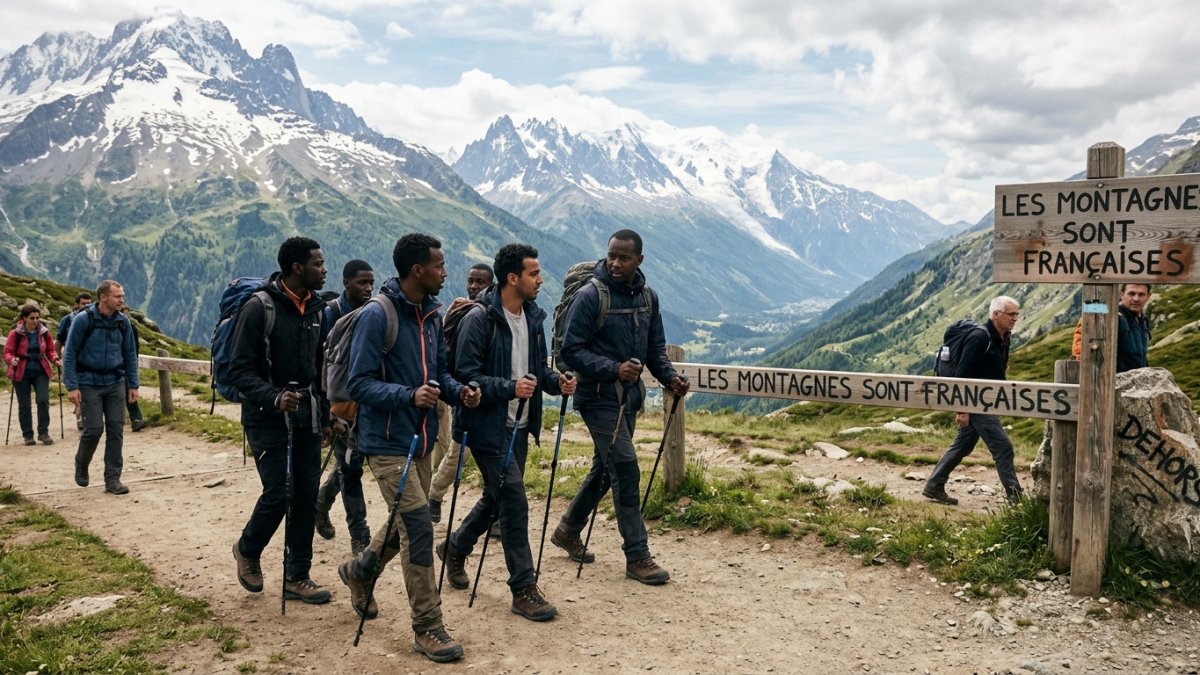
France’s mountains are open to everyone, but Black and Arab hikers say racist remarks, suspicion and exclusion can make them feel unwelcome on trails and at resorts. A social media backlash this summer has prompted a new wave of hikers to make their presence visible and insist that outdoor spaces belong to them too.
A racist post sparks a response
In August, a video of a mountain landscape circulated with a caption describing the area as one of the few places in France where people could feel safe from Arab expressions and Muslim culture. The post echoed a wider idea that the mountains should remain a refuge from certain communities.
Young people of colour responded with the “On arrive” (“We’re coming”) trend, sharing videos of themselves hiking, camping and climbing. The clips turned the original message into a collective statement that they have the same right to enjoy nature.
Racism and exclusion on the trail
Samir Souadji, who leads an organisation offering outdoor activities to young people, described facing doubts when seeking support for mountain programmes and racist comments while accompanying groups. In one incident near Chamonix, hikers mocked his group with remarks that questioned whether the young people belonged in the mountains.
People interviewed for the report described being watched, treated with suspicion or patronised about whether they would respect the environment. Souadji said such comments often came from visitors from cities rather than local mountain residents, whom he described as generally welcoming.
Who is seen as belonging?
Geography lecturer Léa Sallenave says mountain recreation has been shaped by a dominant culture with its own codes, which can make other visitors feel out of place. Her research examined images from Alpine resort websites and found that they overwhelmingly featured people perceived as white.
A 2020 study of a Grenoble programme introducing young people from working-class neighbourhoods to nature also recorded accounts of racialised treatment. Participants described the people they encountered seeming whiter the further they climbed. Sociologist Nacira Guénif-Souilamas argues that these experiences reflect broader racial stereotypes and the idea that some groups are more entitled than others to enjoy nature.
Making outdoor spaces more inclusive
Outdoor organisers say access involves more than reaching a trail: representation, social barriers and the fear of being singled out can shape whether people feel comfortable there. Groups and creators are organising outings, sharing practical advice and posting images of hikers from communities that have often been missing from outdoor media.
The “We’re coming” videos answer exclusion with visibility. Their message is simple: France’s mountains are not reserved for one group, and everyone should be able to explore them without having to prove they belong.