Hajj is the annual Islamic pilgrimage to Makkah in Saudi Arabia and is one of the five pillars of Islam. Every Muslim who is physically and financially able is required to perform Hajj at least once in their lifetime.
Each year, millions of Muslims from around the world gather in Makkah during the Islamic month of Dhul Hijjah to complete a series of rituals that trace back to Prophet Ibrahim (Abraham), his wife Hajar, and Prophet Muhammad ﷺ.
Why Do Muslims Perform Hajj?
Hajj is both an act of worship and a spiritual journey. Muslims believe it represents obedience to Allah, unity among believers, repentance from sins and remembrance of the sacrifices made by Prophet Ibrahim and his family.
The Prophet Muhammad ﷺ said:
“Whoever performs Hajj and does not commit any obscenity or wrongdoing will return as sinless as a newborn child.”
(Sahih al-Bukhari, Sahih Muslim)
Tawaf – Circling the Kaaba
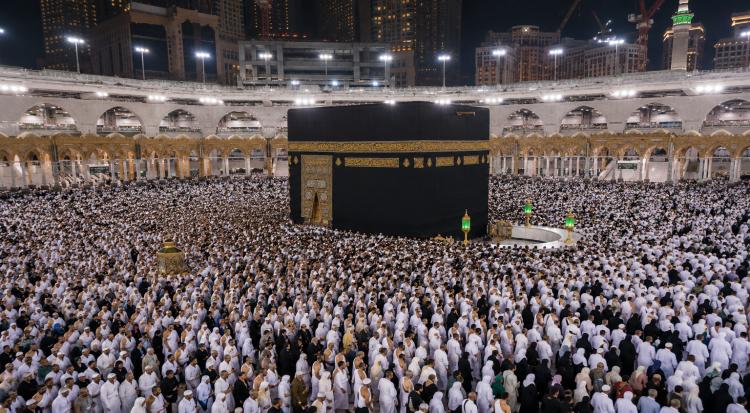
One of the most recognisable rituals of Hajj is Tawaf, where pilgrims circle the Kaaba seven times in a counter-clockwise direction.
Muslims believe the Kaaba was originally built by Prophet Ibrahim and his son Ismail as a house of worship dedicated to Allah. Tawaf symbolises devotion, unity and the centrality of worshipping one God.
Sa’i – Walking Between Safa and Marwah
Pilgrims also walk seven times between the hills of Safa and Marwah, following the actions of Hajar, the wife of Prophet Ibrahim.
According to Islamic tradition, Hajar ran between the two hills searching for water for her son Ismail in the desert before Allah provided the Zamzam well.
The ritual represents patience, trust in Allah and perseverance during hardship.
The Day of Arafah
Pilgrims gather on the plains of Arafah on the 9th of Dhul Hijjah, considered the most important day of Hajj.
Muslims spend the day praying, seeking forgiveness and making supplication. The Prophet Muhammad ﷺ said:
“Hajj is Arafah.”
(Sunan al-Tirmidhi)
Many Muslims who are not performing Hajj also fast on this day because of its spiritual significance.
Muzdalifah and Mina
After sunset on Arafah, pilgrims travel to Muzdalifah, where they pray and collect small stones. They then continue to Mina.
In Mina, pilgrims perform the symbolic “stoning of the pillars,” known as Rami al-Jamarat. This ritual commemorates Prophet Ibrahim rejecting the temptations of Shaytan (Satan) by throwing stones at him.
The act symbolises resisting evil, temptation and sin.
Eid al-Adha and Sacrifice
During Hajj, Muslims also commemorate the willingness of Prophet Ibrahim to sacrifice his son in obedience to Allah before Allah replaced the sacrifice with a ram.
Muslims around the world mark this event through Eid al-Adha and the sacrifice of animals, with meat often distributed to the poor and needy.
A Journey of Unity
Hajj brings together Muslims of every nationality, language and background. Pilgrims wear simple white garments known as Ihram, symbolising equality before Allah and removing signs of wealth or status.
In his Final Sermon, Prophet Muhammad ﷺ reminded Muslims:
“An Arab has no superiority over a non-Arab, nor does a non-Arab have superiority over an Arab, except by piety and good action.”
For many Muslims, Hajj is the spiritual journey of a lifetime — one centred on worship, sacrifice, humility and unity.