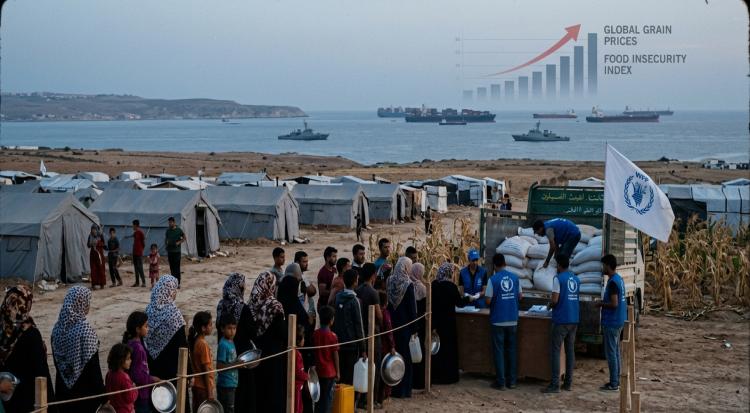
Middle East Conflict Driving Millions Toward Hunger, Says WFP
The United Nations World Food Programme (WFP) says the ongoing Middle East conflict is pushing millions of people closer to hunger as food prices rise and humanitarian funding declines.
According to the agency, rising fuel and transport costs linked to regional instability have disrupted shipping routes and increased global food prices. It said joint US-Israeli strikes on Iran earlier in the year triggered wider tensions affecting key trade corridors, including the Strait of Hormuz.
The WFP warned that a previously projected scenario of 45 million people facing acute food insecurity is now unfolding, with oil prices remaining above $100 per barrel since March.
Countries including Somalia, Afghanistan and Sri Lanka are among the worst affected. In Somalia, about 6.5 million people could face severe hunger in 2026, while Afghanistan may see 17.4 million people impacted. Millions more are at risk if disruptions continue.
The agency also highlighted worsening funding shortages, saying it may be forced to reduce assistance to millions of people in 2026. In some regions, rising fuel costs have sharply increased aid delivery expenses and delayed humanitarian operations.
The WFP warned that ongoing instability is compounding existing drought and economic pressures, deepening food insecurity across vulnerable regions.