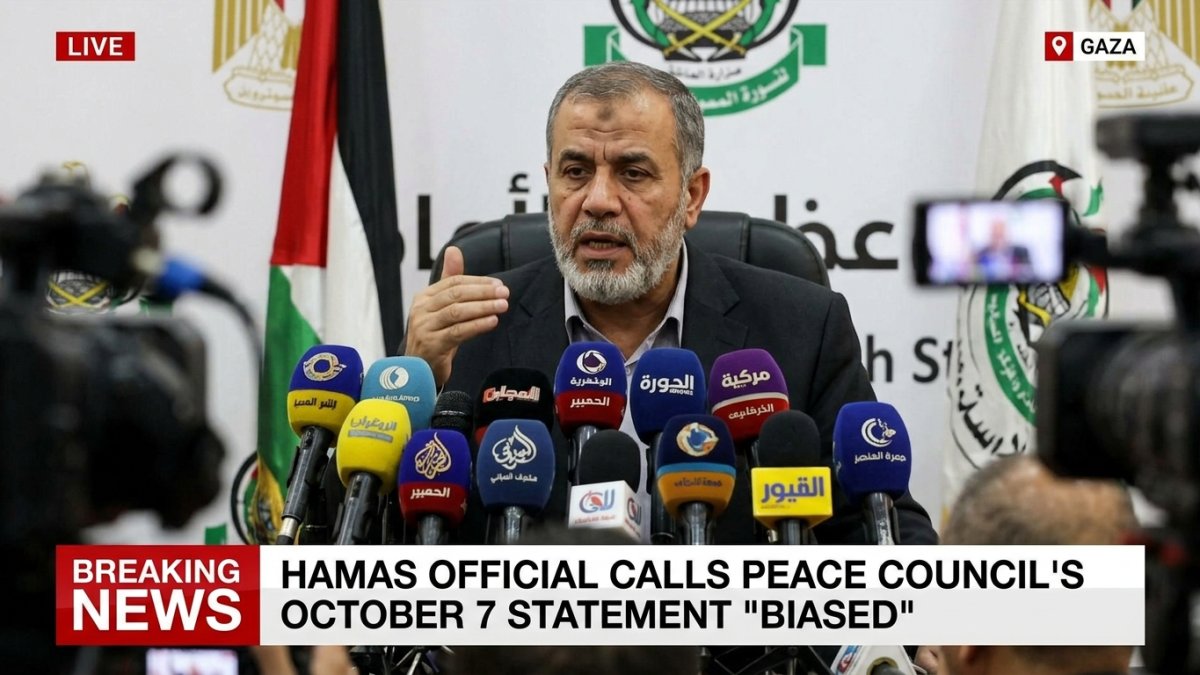
Basem Naim, a member of Hamas’s political bureau, has rejected the Peace Council’s statement marking three years since the 7 October 2023 attacks, calling it biased in both its wording and emphasis. In a post on X, Naim argued that the message did not reflect the role of an institution meant to uphold international law and support peace.
Hamas official challenges the wording
Naim said the statement was inappropriate and would not help bring peace, stability or prosperity. His criticism focused on the council’s framing of Israel’s security and its account of the events and their aftermath. The comments represent Hamas’s position; they do not independently establish the council’s intent or the accuracy of either side’s claims.
The council’s message said Israel’s lasting security was a foundation for peace. It expressed regret over the heavy loss of life and profound suffering experienced by Israelis and Palestinians. It also credited US President Donald Trump with securing the return of hostages, describing this as fulfilment of a commitment to Israelis.
Different accounts of the council’s role
The statement further referred to the UN Security Council’s mandate for the Peace Council, saying it should ensure Gaza does not again pose a threat to Israel and help end decades of violence associated with Hamas. That formulation places Israeli security and Hamas’s role at the centre of the council’s stated priorities.
Naim objected that this language was one-sided and insufficiently attentive to Palestinian suffering and rights. The competing statements highlight a disagreement over what should be prioritised in efforts to stabilise Gaza: Israel’s security, Palestinian protection and political rights, the status of armed groups, and the terms of any future settlement.
Dispute over the path to peace
The exchange comes as Palestinians continue to face the consequences of war and as regional and international actors debate the arrangements for Gaza. The council’s statement describes security as a prerequisite for peace, while Naim says its wording reinforces a particular political narrative rather than offering an even-handed basis for reconciliation.
Both are public positions by interested parties. The council’s mandate and future actions will matter more than a commemorative statement in determining whether it can address civilian protection, reconstruction and a durable political solution. Neither statement by itself resolves the underlying disputes or demonstrates that peace has been achieved.