The stabbing attack in Golders Green that left two Jewish men wounded has triggered wider debate in Britain after reports emerged that a Muslim man was also attacked by the same suspect earlier that day.
Police say the suspect, 45-year-old Essa Suleiman, allegedly attempted to stab a Muslim acquaintance in Southwark, south London, before travelling to Golders Green on April 29, where two visibly Jewish men were later attacked in what authorities classified as a terrorist incident.
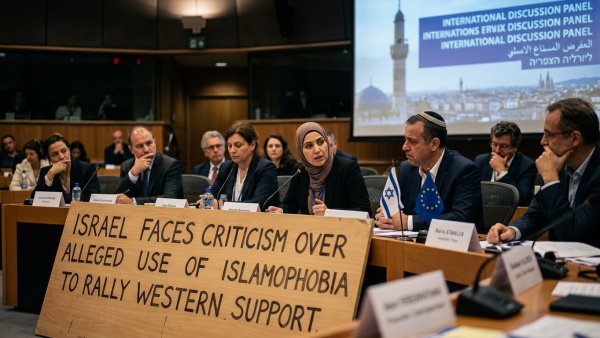
Critics accused parts of the British media and political establishment of largely ignoring the Muslim victim while heavily focusing on the antisemitic nature of the later attacks. Commentators argued the imbalance exposed what they described as selective outrage and inconsistent treatment of victims depending on identity and political narrative.
The case has intensified tensions around Islamophobia, antisemitism and media bias in Britain amid the continuing fallout from the Gaza war. Community leaders condemned all three attacks while warning against attempts to rank victims based on religion or ethnicity.
British counterterrorism police continue investigating the incidents, while the UK terror threat level was recently raised to “severe” following a series of violent attacks and hate-related incidents across London.
The debate surrounding the Golders Green case has also renewed discussion over the importance of verifying information and media narratives before forming conclusions. The Quran itself stresses verification in reporting and public claims: ‘O you who believe, if a rebellious evildoer comes to you with news, verify it, lest you harm people in ignorance and afterwards become regretful for what you have done.’ (Quran 49:6)