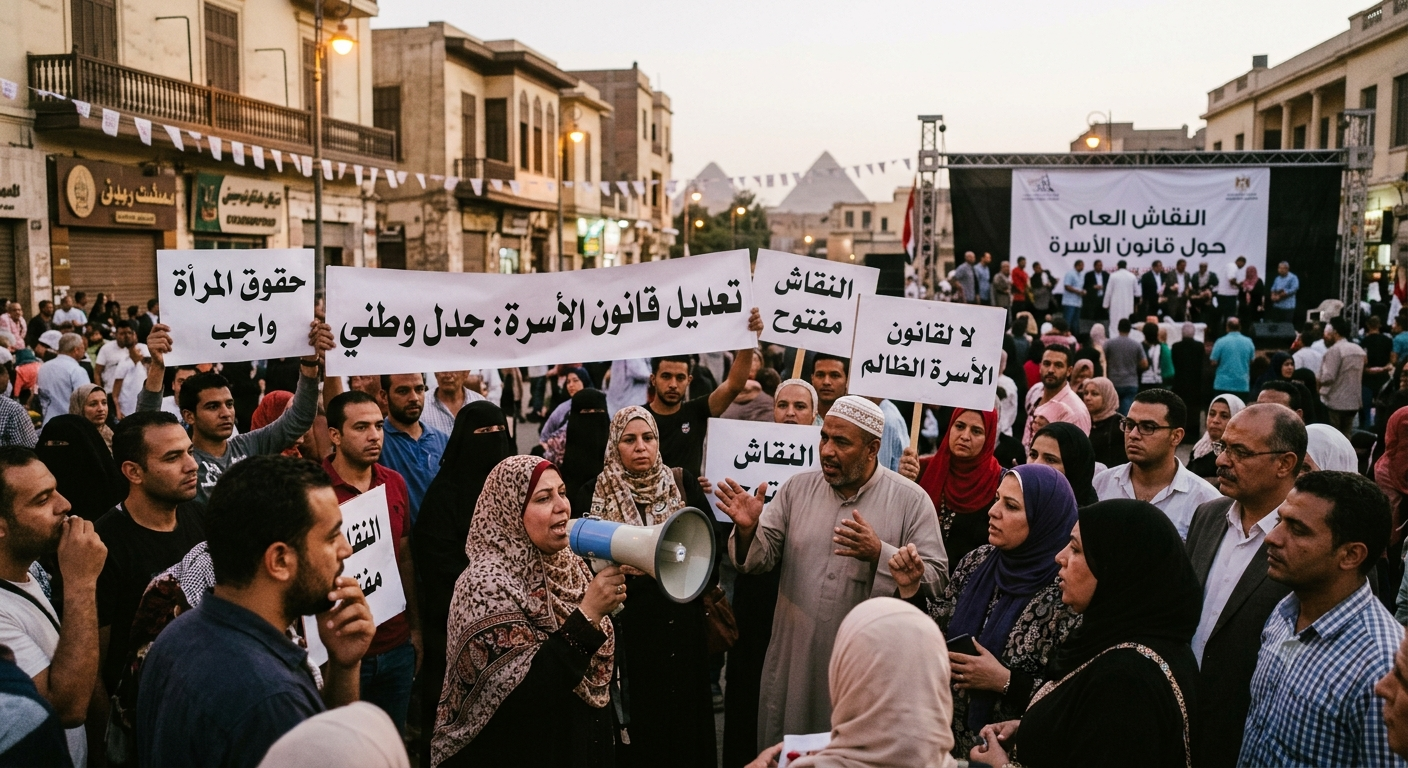
Egypt’s proposed new Family Law has sparked intense debate across the country, with critics warning that several provisions could increase family disputes and place additional burdens on Egyptian households.
The draft legislation, consisting of around 355 articles, addresses key issues including marriage, divorce, alimony, child custody, visitation rights and financial responsibilities. The proposal has drawn attention from religious authorities, legal experts, activists and ordinary citizens.
A major point of contention is that Al-Azhar, Egypt’s highest Islamic authority, says it was not involved in drafting the law and has yet to receive the final text for review. The institution insists that any personal status legislation should comply with Islamic principles.
Supporters argue the law would strengthen protections for women and children, while critics say it places excessive financial and legal obligations on men. Disputed provisions include rules on child custody, visitation rights, financial compensation after divorce, restrictions on polygamy and penalties related to undocumented verbal divorces.
Family law specialists warn that some articles may be open to misuse and could lead to longer legal battles rather than reducing conflict. Concerns have also been raised about the impact of the proposed changes on marriage rates and family stability.
The debate comes as Egypt continues to face high divorce rates and growing economic pressures, making family-related reforms one of the country’s most sensitive social issues.