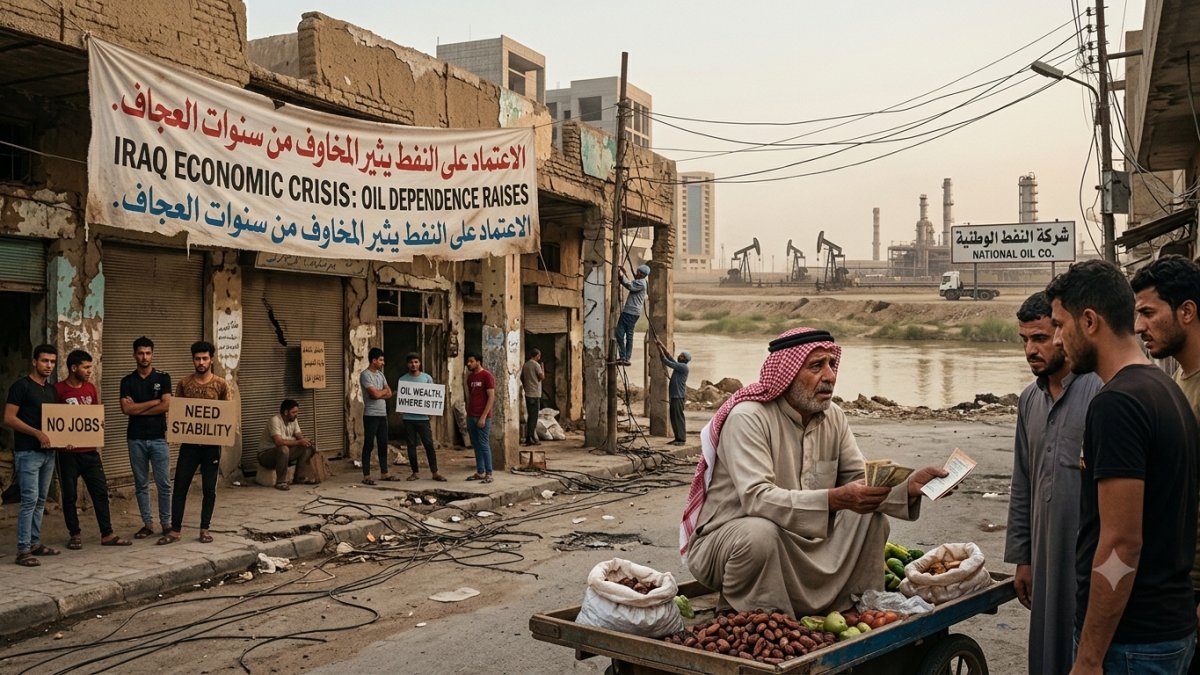
Iraq Economic Crisis: Oil Dependence Raises Fears of Lean Years
Iraq’s Financial Crisis: Is the Country Entering Years of Economic Hardship?
Iraq is facing growing financial pressure as declining oil revenues make it harder for the government to cover salaries and basic state expenses. A recent warning from Iraq’s Health Minister that “there is no money” has increased public concerns about the country’s economic situation.
The Iraqi government requires around 10.8 trillion dinars ($8.24bn) every month to pay salaries and meet essential obligations. However, falling oil income, especially after disruptions linked to the Strait of Hormuz, has created a major gap between state revenues and spending.
Government employees and pensioners are already feeling the impact, with salary delays affecting families and increasing pressure from rising living costs. Many citizens fear that prolonged financial problems could reduce living standards.
Officials say the crisis has moved beyond a temporary problem. Monthly payments for civil servants, retirees and welfare beneficiaries require billions of dollars, while state income has fallen significantly below those needs.
The crisis has exposed Iraq’s long-standing dependence on oil. Although the government had planned economic reforms, including infrastructure projects and private-sector expansion, political disputes and export challenges have limited progress.
The government has warned that continued pressure could force Iraq to seek domestic and international loans. Officials are also preparing spending cuts, including reductions in food ration programs, government allocations and some public projects.
Experts say Iraq’s current difficulties are not only a short-term liquidity issue but the result of years of relying almost entirely on oil revenues. Without economic diversification, every drop in oil exports or global energy shock could continue to threaten government finances and public services.