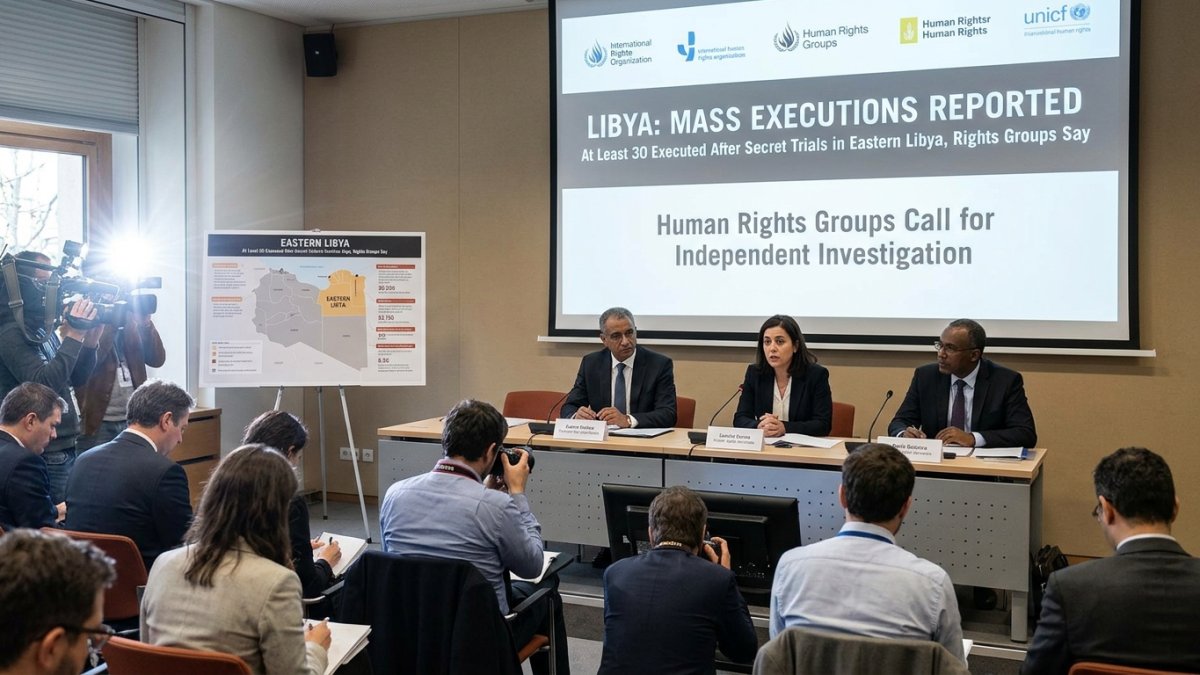
At least 30 people have been executed in eastern Libya since late August after convictions in military-court cases that human rights groups describe as secretive and grossly unfair. Amnesty International says at least 50 other men remain under sentence of death and face an imminent risk of execution.
Executions resumed in August
On August 23, the military prosecutor aligned with the Libyan Arab Armed Forces (LAAF) announced that 10 people had been executed by firing squad after convictions on charges including joining prohibited groups and murder. Amnesty says another 20 people were executed by September 9. The executions marked the first reported use of the death penalty in Libya since 2010.
Libya Crimes Watch documented 31 executions by September 10—eight people from Derna and 23 from Benghazi—based on military-court sentences. The group says case files have not been made public, leaving it unable to independently verify whether fair-trial protections were respected.
Allegations of secret trials and torture
Amnesty says military courts in eastern Libya have convicted hundreds of civilians in secret proceedings it considers grossly unfair, including cases targeting people viewed as opponents or critics of LAAF forces and their allies. Several defendants were reportedly forcibly disappeared or held incommunicado for extended periods. Some said they were tortured, including through electric shocks, burns, beatings and stress positions, and that coerced statements were later used against them.
Amnesty says the legal basis for the executions remains unclear. Libya Crimes Watch has called for the judgments and supporting information to be disclosed so that defence rights, appeals and other safeguards can be examined.
At least 50 more men face execution
Amnesty says at least 50 men remain on death row at Gernada military prison. Some of those executed or sentenced were arrested in Derna and Benghazi during or after periods of conflict. The organisation warns that further executions could take place unless authorities halt them.
Families denied a chance to mourn
Families of some executed men say authorities have prevented them from receiving the bodies and holding funeral ceremonies. Human rights advocates say the allegations add to the suffering of relatives already seeking information about cases conducted without public records.
Amnesty and Libya Crimes Watch have urged eastern authorities to stop executions, disclose court files and investigate allegations of torture and other violations. The authorities have described those sentenced as convicted of serious offences, while critics say the lack of transparent proceedings makes it impossible to assess the cases independently.