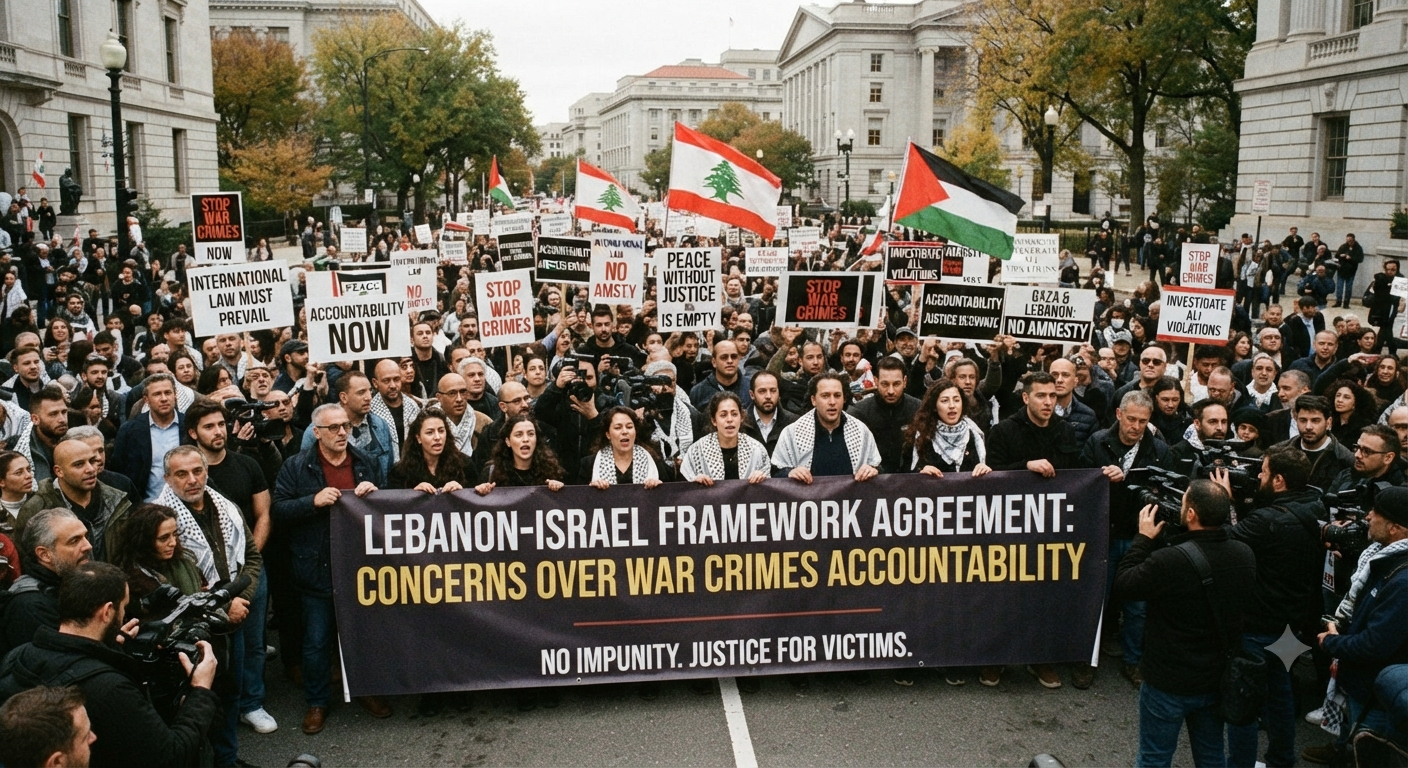
Lebanon-Israel Framework Agreement Raises Concerns Over War Crimes Accountability
A framework agreement signed between Lebanon and Israel has prompted concern among legal and human rights experts, who say one of its provisions could hinder efforts to seek accountability for alleged war crimes.
Article 13 of the US-brokered agreement commits both sides to avoid hostile or adverse actions against each other in international political and legal forums. Critics argue the clause could discourage future legal action over alleged violations committed during the conflict.
Lebanese legal experts and the National Human Rights Commission say victims' rights to seek justice and reparations should not be restricted by political agreements. They maintain that accountability for alleged war crimes and crimes against humanity is protected under international law.
The agreement also outlines a process for Lebanese army deployment in parts of southern Lebanon and links any Israeli withdrawal from occupied areas to future security conditions and the disarmament of Hezbollah.
Although neither Lebanon nor Israel is a member of the International Criminal Court, rights groups have continued urging Lebanon to recognise the court's jurisdiction so alleged crimes committed during the conflict can be investigated.
Hezbollah has rejected the agreement, insisting Israel must withdraw unconditionally, while Israeli officials have said military forces could remain in southern Lebanon until security concerns are addressed.