US–Iran Islamabad MoU Sets Framework to End War, But Major Disputes Remain
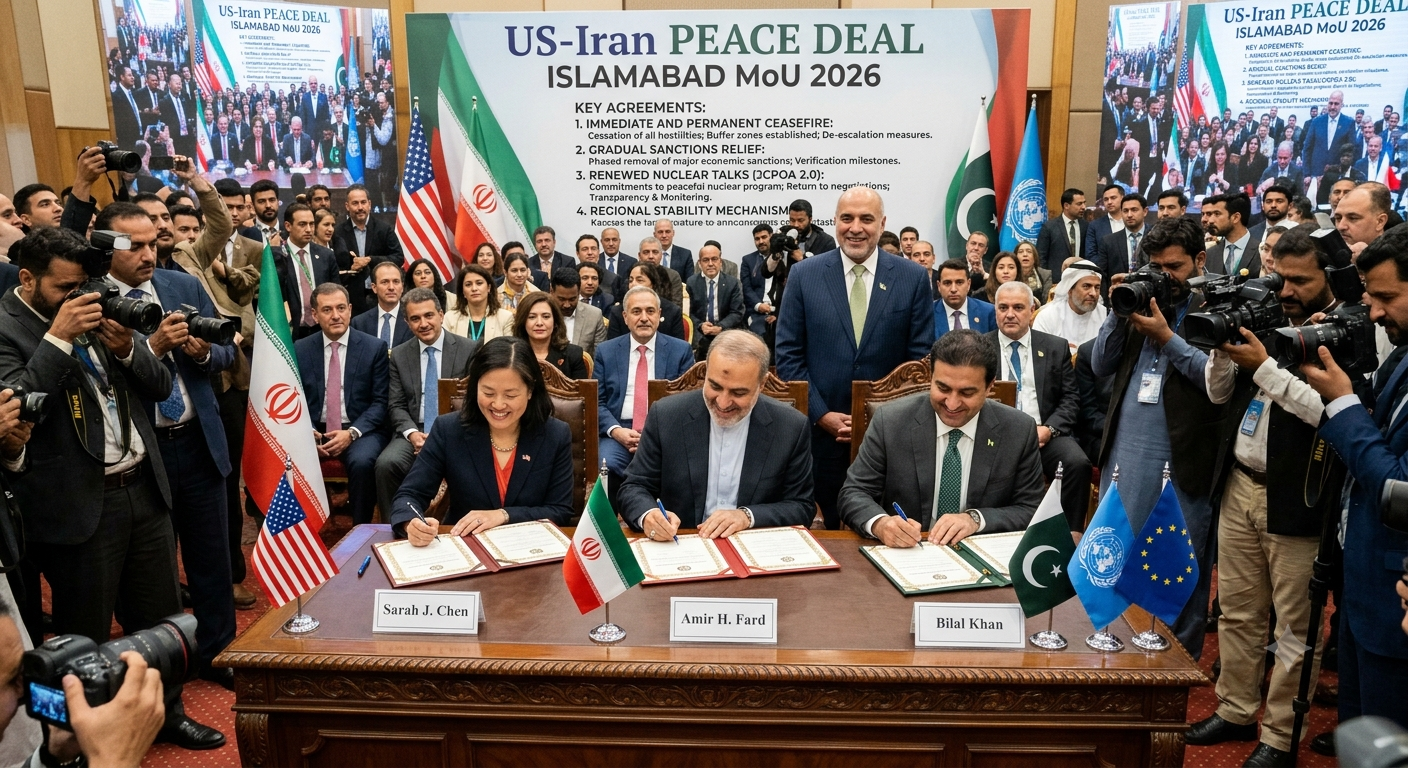
A new framework agreement known as the Islamabad Memorandum of Understanding (MoU) was signed in June 2026 between the United States and Iran, aiming to end the ongoing Middle East war and establish a pathway toward a final peace deal.
The accord, separately signed by US President Donald Trump and Iranian President Masoud Pezeshkian, calls for an immediate halt to military operations, including in Lebanon, and commits both sides to respect sovereignty and avoid interference in internal affairs.
A key economic provision includes reopening the Strait of Hormuz, allowing commercial shipping to pass freely for an initial 60-day period. The agreement also outlines a phased lifting of US sanctions on Iran, the release of frozen assets, and discussions on a potential reconstruction package worth hundreds of billions of dollars, though details remain contested.
Negotiations on Iran’s nuclear program have been delayed for 60 days, with both sides agreeing to later decide on enriched uranium stockpiles under international supervision. Iran has also reaffirmed it will not pursue nuclear weapons.
The MoU notably excludes any restrictions on Iran’s ballistic missile program and makes no mention of regime change. It also establishes a monitoring mechanism for compliance and allows for extension of negotiations by mutual consent.
Despite the framework, major disagreements remain over sanctions relief, military withdrawals, and long-term control of the Strait of Hormuz, leaving the deal’s future uncertain.